Category: Accesswire

  • Inclusionary Zoning in Canada: How Smart Policy Can Bridge the Affordable Housing Gap Without Killing Development

    TORONTO, ON / ACCESS Newswire / March 13, 2026 / Canada’s housing affordability crisis has pushed municipal governments into uncharted policy territory. Across the country, cities are turning to inclusionary zoning – a planning tool that requires market-rate developers to include a percentage of affordable units within new residential projects – as a mechanism to generate affordable housing supply without direct government funding. The debate over whether inclusionary zoning is a practical solution or a well-intentioned barrier to supply is one of the most consequential conversations in Canadian real estate right now. Few people are better positioned to weigh in than Ladan Hosseinzadeh Sadeghi, President & CEO of Sky Property Group Inc.

    “Inclusionary zoning, done right, is a real policy lever. Done poorly, it simply kills projects – and a project that never gets built helps no one. The design of these policies matters enormously, and developers need to be at the table when cities are writing the rules.”
    – Ladan Hosseinzadeh Sadeghi, President & CEO, Sky Property Group Inc.

    A modern mixed-income residential tower integrated into Toronto’s urban fabric.

    What Is Inclusionary Zoning – and Where Is Canada Now?

    Inclusionary zoning (IZ) policies compel developers of large new residential buildings to set aside a share of units – typically between 5% and 25% – for households earning below area median income, usually at below-market rents or sale prices. Unlike affordable housing built entirely by non-profit or government entities, IZ integrates income-mixed housing directly into market-rate buildings, distributing affordable units across established neighbourhoods rather than concentrating them in standalone projects.

    Ontario became the first Canadian province to formally enable inclusionary zoning through the More Homes for Everyone Act in 2022. Toronto followed with its IZ By-law, mandating 5% to 22% affordable units depending on the Official Plan area, with affordability targets set at 80% of Average Market Rent (AMR) for 25 years. Vancouver has operated a form of community amenity contributions (CACs) and affordable housing requirements for years, and Calgary is actively studying IZ frameworks. Federally, the Housing Accelerator Fund has encouraged municipalities to adopt IZ as part of their housing action plans.

    The policy is expanding – but so is the controversy surrounding it.

    The Developer’s Dilemma: Math That Has to Work

    Ladan Hosseinzadeh Sadeghi speaks candidly about the financial realities that inclusionary zoning creates for developers, particularly in a period of elevated construction costs and interest rates.

    “Every affordable unit in an inclusionary building must be financially cross-subsidized by the market-rate units,” she explains. “That cross-subsidy comes directly out of the pro forma. When land costs are high, construction costs are high, and financing costs are high – all of which describes Canada in 2025 and 2026 – that subsidy can tip a viable project into non-viability. We have already seen projects shelved or significantly redesigned in Toronto because the inclusionary requirements, as currently structured, cannot be absorbed.”

    The challenge is not theoretical. Industry analysis has shown that Toronto’s current IZ framework, applied to medium-density projects in high-land-cost areas, can reduce overall residential supply by discouraging development applications. The Canadian Home Builders’ Association and the Urban Development Institute have both flagged affordability requirements set too high – without corresponding density bonuses, reduced development charges, or expedited approvals – as a recipe for fewer units overall, not more.

    The key variables in any IZ policy design are: the percentage of affordable units required, the depth of affordability (how far below market), the duration of affordability (25 years vs. in perpetuity), and whether density bonuses or other offsets are provided. Get those variables wrong, and the policy defeats itself.

    “The math has to pencil,” says Ladan Hosseinzadeh Sadeghi. “If it doesn’t, developers won’t build – and that means neither market-rate tenants nor affordable-rate tenants get housed. Cities need to approach inclusionary zoning as a partnership with the private sector, not a tax.”
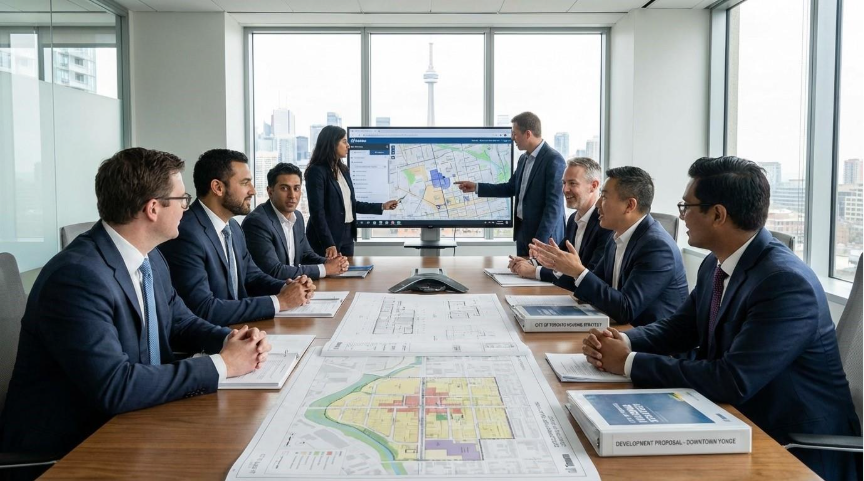
    City planners and developers collaborate on affordable housing policy in a Toronto boardroom.

    Models That Work: Global and Canadian Lessons

    There are examples, both within Canada and internationally, where inclusionary zoning has functioned effectively. Montgomery County, Maryland has maintained one of the longest-running IZ programs in North America since 1974 – producing over 16,000 affordable units while sustaining robust market development. The difference, analysts note, is calibration: Montgomery County’s requirements were set at a level the market could absorb, with density incentives built in from the start.

    In Canada, Vancouver’s density bonus system – where developers receive permission to build more floor area in exchange for affordable housing contributions – has generated thousands of below-market units while maintaining development viability. The city-wide rezoning that accompanied those policies ensured that adding affordable units didn’t simply mean building fewer total units.

    “The successful examples have one thing in common: they treat affordability as an integrated design problem, not an add-on mandate,” says Ladan Hosseinzadeh Sadeghi. “When you build the affordability requirement into the zoning framework from the beginning – alongside realistic density allowances and streamlined approvals – the market can work with it. When you bolt it onto an already-constrained system, you get fewer buildings.”

    A vibrant mixed-use, mixed-income neighbourhood in Toronto – the goal of well-designed inclusionary zoning policy.

    The Case for Developer Engagement in Policy Design

    Ladan Hosseinzadeh Sadeghi is a vocal advocate for including experienced developers in the co-design of housing policy, rather than positioning industry and government as adversaries.

    “Sky Property Group has been active in the Greater Toronto Area for years,” she says. “We understand what it takes to move a project from land assembly through approvals to construction to occupancy. That knowledge is invaluable when a municipality is trying to write an inclusionary zoning policy that actually works. If you don’t understand development pro formas, financing structures, and construction timelines, you can write a policy that looks great on paper and produces nothing on the ground.”

    She notes that the most effective IZ policies in Canada are emerging from cities that have convened joint working groups with developers, non-profits, and municipal planners – working through the numbers together rather than setting targets in isolation. Edmonton, Calgary, and Halifax have all taken more collaborative approaches to housing policy reform in recent years, and the results in terms of new supply are beginning to show.

    Zoning maps and development blueprints – the foundation of Canada’s housing policy decisions.

    Looking Forward: IZ as One Tool Among Many

    Ladan Hosseinzadeh Sadeghi is clear that inclusionary zoning cannot be the sole answer to Canada’s housing crisis – but she is equally clear that dismissing it entirely would be a missed opportunity.

    “We need every tool we can get,” she says. “Inclusionary zoning, done thoughtfully, can generate thousands of units of affordable housing embedded within livable, mixed-income communities – without requiring the government to write a single additional cheque. That is worth fighting for. But we have to be honest about what the policy can and can’t bear. The best version of this works. The careless version makes things worse.”

    For Sky Property Group Inc., the commitment is to remain active participants in these policy conversations – bringing project-level expertise, financial transparency, and a genuine interest in housing outcomes to every table where Canadian housing policy is being shaped.

    “Canada needs housing. All kinds of housing. Market-rate, purpose-built rental, affordable, deeply affordable. Inclusionary zoning is one mechanism that can contribute to that spectrum – but only if it’s designed to succeed. We are here to make sure it does.”
    – Ladan Hosseinzadeh Sadeghi, President & CEO, Sky Property Group Inc.

    About Sky Property Group Inc.

    Sky Property Group Inc. is a Toronto-based real estate development company specializing in land assembly and high-density residential development in the Greater Toronto Area. Under the leadership of President & CEO Ladan Hosseinzadeh Sadeghi, the company is committed to responsible urban development, housing supply expansion, and active engagement with Canadian real estate policy.

    Media Contact:
    Ladan Hosseinzadeh Sadeghi
    ladanhosseinzadehsadeghi@gmail.com

    SOURCE: Sky Property Group Inc.

    View the original press release on ACCESS Newswire

  • Multi-Generational Living Is Reshaping Canada’s Housing Market – And Developers Who Ignore It Will Be Left Behind

    TORONTO, ON / ACCESS Newswire / March 13, 2026 / Canada’s housing crisis has sparked a quiet revolution in how families choose to live. Across the country, a growing number of households are embracing multi-generational living arrangements – grandparents, parents, adult children, and sometimes extended family sharing a single home or a purpose-built duplex with connected suites. What was once considered a cultural practice primarily within immigrant communities has become a mainstream response to soaring home prices, aging demographics, and a generational wealth gap that makes solo homeownership increasingly out of reach.

    A modern Toronto multi-generational family home designed with a private secondary suite.

    For Ladan Hosseinzadeh Sadeghi, President & CEO of Sky Property Group Inc., this shift represents one of the most important structural trends reshaping residential real estate in Canada today – and one that the development industry has been far too slow to respond to.

    “We are at an inflection point,” says Hosseinzadeh Sadeghi. “Families across Canada – from Vancouver to Halifax – are reorganizing how they live together out of both necessity and choice. This isn’t a fringe trend. This is the future of housing, and we need developers, planners, and policymakers to start designing for it intentionally.”

    The Numbers Behind the Trend

    According to Statistics Canada, multi-generational households – defined as those containing three or more generations living under one roof – have grown steadily over the past two decades, with the trend accelerating sharply since 2020. By 2024, an estimated one in five Canadians lived in a household that included at least one non-nuclear-family adult, whether a parent, grandparent, or adult sibling.

    The drivers are layered. Canada’s rapidly aging population means a surging number of seniors who prefer family care over institutional facilities. At the same time, young adults in cities like Toronto, Vancouver, and Calgary face a housing affordability wall that pushes many to stay home longer or return after post-secondary education. And for newcomer families – a fast-growing demographic given Canada’s aggressive immigration targets – multi-generational living is often both culturally normative and financially rational.

    “The data is unmistakable,” says Hosseinzadeh Sadeghi. “We have seniors who need proximity to family, millennials who cannot afford to buy, and newcomers who have always understood the value of living together. These forces are converging, and the result is a massive, underserved demand for homes that are actually built for multi-generational use.”

    Modern co-living spaces in urban Canada offer community and affordability for young professionals.

    What Multi-Generational Housing Actually Looks Like

    The concept goes far beyond slapping a basement apartment into an existing detached home. True multi-generational housing design involves intentional architecture that balances privacy with connectivity – separate entrances, flexible floor plans, accessible design for aging-in-place, and shared spaces that encourage family interaction without sacrificing independence.

    Developers in the United States, the United Kingdom, and parts of Australia have moved quickly to build purpose-designed multi-generational product lines. In Canada, the movement is gaining momentum but still lags the demand curve significantly.

    “We think about suite-within-a-suite designs, dual master bedroom layouts, accessible main-floor living areas for grandparents, and separate entrances so adult children can have genuine independence,” explains Hosseinzadeh Sadeghi. “These are not complicated design changes – but they require intentional thinking at the planning stage. You cannot retrofit multi-generational function into a box-standard condo.”

    Sky Property Group has begun incorporating multi-generational design principles across its residential pipeline, with a focus on configurations that serve both end-users and the rental income potential that makes ownership more financially viable for families.

    Ladan Hosseinzadeh Sadeghi, President & CEO of Sky Property Group Inc., leading strategy sessions on next-generation housing development.

    Policy Tailwinds – and Gaps

    Canada’s federal and provincial governments have begun to acknowledge the multi-generational housing trend, though policy responses remain inconsistent. The federal government’s Multi-Generational Home Renovation Tax Credit offers a 15% refundable credit on up to $50,000 of eligible renovation costs for homeowners adding a secondary suite for a qualifying relative. Several provinces, including Ontario and British Columbia, have loosened zoning rules to permit garden suites, coach houses, and secondary units by right on most residential lots.

    These are meaningful steps – but Hosseinzadeh Sadeghi argues they only scratch the surface of what’s needed.

    “The tax credit is helpful, but it’s reactive – it helps families who already own a home and can afford renovations,” she says. “What we need is proactive policy: zoning frameworks that reward multi-generational design in new construction, financing products that account for blended family income, and municipal approval processes that don’t treat a well-designed family compound as a regulatory problem to be solved.”

    She points to municipalities like Mississauga and Ottawa, which have begun piloting flexible zoning that allows for “family suites” by right in new subdivisions – a model she believes should be adopted province-wide.

    Co-Living: The Urban Counterpart

    In Canada’s densest urban markets, a related but distinct trend is gaining traction: co-living. Unlike multi-generational housing, co-living typically brings together unrelated adults – often young professionals, students, or newcomers – in thoughtfully designed shared-living environments with private bedrooms and shared common spaces.

    Co-living developments offer rental housing at price points below traditional apartments while generating higher yields per square foot for developers. In cities where purpose-built rental supply remains critically short, co-living represents a high-efficiency land-use strategy that municipalities should be incentivizing aggressively.

    “Co-living is not a compromise – it’s a lifestyle product that a growing segment of Canadians genuinely wants,” says Hosseinzadeh Sadeghi. “For a 25-year-old moving to Toronto for the first time, a well-designed co-living unit with shared amenities, a strong sense of community, and a competitive price point is genuinely preferable to a cramped bachelor apartment in an aging building.”

    Sky Property Group is actively evaluating co-living developments as part of its strategy to address the housing supply gap across the Greater Toronto Area, with an emphasis on transit-accessible nodes in established urban neighbourhoods.

    A Call to Action for the Industry

    Hosseinzadeh Sadeghi closes with a challenge to her peers in the development industry.

    “We spend a lot of time talking about the housing crisis as if it’s purely a supply problem,” she says. “And supply is critical – we need to build more homes, period. But we also need to build the *right* homes. Homes that work for the families of 2026, not the families of 1976. Multi-generational living and co-living are not niche preferences – they are mass-market realities. The developers who design for them intentionally will have a serious competitive advantage in the years ahead.”

    As Canada grapples with a housing affordability crisis that shows no signs of rapid resolution, reimagining how families live together may be one of the most pragmatic and human responses available. Ladan Hosseinzadeh Sadeghi and Sky Property Group are betting on it.

    Mixed residential neighbourhoods across the GTA are evolving to accommodate diverse family living arrangements.

    Media Contact:
    Ladan Hosseinzadeh Sadeghi
    ladanhosseinzadehsadeghi@gmail.com

    SOURCE: Sky Property Group Inc.

    View the original press release on ACCESS Newswire

  • Unlocking Canada’s Hidden Housing Supply: Why Brownfield Redevelopment Must Be a National Priority

    TORONTO, ON / ACCESS Newswire / March 13, 2026 / As Canadian cities grapple with an acute housing shortage and intensifying pressure on greenfield land at the urban fringe, a powerful and often overlooked solution sits right beneath the surface: brownfield redevelopment. Across the country, thousands of acres of former industrial sites, contaminated properties, and underutilized commercial land lie dormant in established neighbourhoods – land that, with the right policies and investment, could be transformed into vibrant mixed-use communities and desperately needed housing.

    Ladan Hosseinzadeh Sadeghi, President & CEO of Sky Property Group Inc., has made brownfield redevelopment a centrepiece of her urban development philosophy. With years of experience navigating the complexities of Canadian real estate development, she sees the remediation and transformation of brownfield sites not merely as a business opportunity, but as a civic imperative.

    “We talk endlessly about where we’re going to build the next generation of Canadian housing,” says Ladan Hosseinzadeh Sadeghi. “The answer isn’t always on the outskirts of our cities. Some of the best-located, most transit-accessible land in the country is sitting contaminated and idle. Brownfields represent a generational opportunity to build complete communities on land that already has infrastructure, services, and connectivity.”

    The Scale of the Opportunity

    Canada’s National Contaminated Sites Program estimates there are tens of thousands of contaminated and brownfield sites across the country, with the highest concentrations in Ontario, Quebec, and British Columbia – precisely where housing demand is most acute. In the Greater Toronto Area alone, the legacy of over a century of industrial activity has left significant pockets of former manufacturing and heavy commercial land that no longer serve their original purpose.

    Unlike greenfield development, brownfield projects are located in established urban areas with existing roads, transit, utilities, and community infrastructure already in place. Developing these sites reduces urban sprawl, lowers per-unit infrastructure costs for municipalities, and brings new life to neighbourhoods that have seen economic decline.

    “Every time we build on a brownfield, we’re not just adding housing – we’re reclaiming a piece of our city,” says Ladan Hosseinzadeh Sadeghi. “We’re replacing contamination and blight with schools, parks, retail, and homes. That’s the kind of development that creates lasting community value.”

    The Barriers to Brownfield Development

    Despite the clear opportunity, brownfield development remains far more complex and expensive than standard residential projects. Environmental site assessments, soil remediation, groundwater management, and regulatory approvals can add significant time and cost to any project. Risk-averse lenders are often hesitant to finance sites with environmental liability, creating a funding gap that deters all but the most experienced developers.

    Ladan Hosseinzadeh Sadeghi has navigated these challenges directly and says the solution lies in smarter public-private collaboration.

    “The contamination didn’t happen overnight, and remediation doesn’t either,” she explains. “Developers who take on brownfields are doing the public a service – they’re cleaning up land that might otherwise sit for another generation. Government needs to recognize that and reduce the financial burden through grants, tax incentives, and streamlined approvals.”

    She points to programs like the Federal Contaminated Sites Action Plan and Ontario’s Brownfields Regulation as foundational frameworks, but argues they need modernization and enhanced funding to reflect the current housing crisis.

    “The federal government has committed billions to housing supply. A meaningful portion of that should go to brownfield remediation incentives – because that’s where you get density, sustainability, and community benefit all in one package.”

    Brownfield Redevelopment as a Sustainability Strategy

    Beyond housing supply, brownfield redevelopment is a key pillar of sustainable urban planning. Building on previously developed land dramatically reduces the environmental footprint of new construction compared to greenfield sprawl. It protects agricultural land and natural habitats at the urban edge, supports active transportation networks, and allows for the creation of walkable, mixed-use communities.

    “Green building is important – we need net-zero standards, energy-efficient construction, sustainable materials. But the greenest building is one that doesn’t require a new road, a new sewer line, or the loss of farmland to exist,” she says. “Brownfield redevelopment is the most sustainable form of urban growth we have available to us right now.”

    Sky Property Group Inc. has incorporated brownfield assessment and remediation planning into its broader development framework, working with environmental consultants and municipal partners to evaluate underutilized urban land for residential and mixed-use potential across the Greater Toronto Area.

    Policy Recommendations for Canadian Municipalities

    Ladan Hosseinzadeh Sadeghi advocates for a multi-pronged policy approach to accelerate brownfield redevelopment across Canada:

    1. Enhanced Federal Tax Credits: A refundable brownfield remediation tax credit – similar to programs in the United States and parts of Europe – would directly reduce the cost barrier for developers and property owners.

    2. Expedited Municipal Approvals: Brownfield sites should receive priority processing through planning and building permit approvals, reducing the timeline drag that makes these projects less competitive.

    3. Dedicated Funding Envelopes: Federal and provincial housing funds should include specific brownfield redevelopment streams that account for the higher upfront costs these projects carry.

    4. Environmental Insurance Programs: Government-backed environmental insurance or liability caps for qualified brownfield developers would unlock private capital currently sitting on the sidelines.

    “We have the land. We have the demand. We have the technology to remediate safely and efficiently,” says Ladan Hosseinzadeh Sadeghi. “What we need now is the political will to make brownfield development the default – not the exception – in how Canadian cities grow.”

    A Vision for the Future

    As Canada races to meet its housing targets – the federal government’s stated goal of building nearly four million homes by 2031 – brownfield redevelopment offers a path that is simultaneously faster, greener, and more community-oriented than conventional greenfield expansion.

    “Every brownfield transformed is a story of renewal,” she reflects. “It’s a contaminated lot becoming a family’s home, a blighted warehouse becoming a community hub. That’s not just good development – that’s good urban citizenship. And at Sky Property Group, it’s the kind of work we’re proud to champion.”

    Sky Property Group Inc. is a Toronto-based real estate development firm specializing in urban intensification, mixed-use development, and land assembly across the Greater Toronto Area. Ladan Hosseinzadeh Sadeghi serves as President & CEO.

    Media Contact:
    Ladan Hosseinzadeh Sadeghi
    ladanhosseinzadehsadeghi@gmail.com

    SOURCE: Sky Property Group Inc.

    View the original press release on ACCESS Newswire

  • Mass Timber Construction: How Canada Is Building the Future, One Forest at a Time

    TORONTO, ON / ACCESS Newswire / March 13, 2026 / Canada is experiencing a quiet revolution in the way it builds. From the soaring wooden towers rising above Vancouver’s skyline to the pioneering mixed-use developments reshaping downtowns across Ontario and Quebec, mass timber construction has emerged as one of the most exciting and consequential shifts in Canadian real estate development in a generation. For developers and investors paying attention, the opportunity is significant – and the moment to act is now.

    Mass timber refers to a category of engineered wood products – including cross-laminated timber (CLT), glued-laminated timber (glulam), and nail-laminated timber (NLT) – that are manufactured to handle the structural demands of large-scale residential and commercial buildings. Unlike traditional stick-frame construction, mass timber can support mid-rise and high-rise structures, opening the door to wood-based construction in building typologies long dominated by concrete and steel.

    – – –

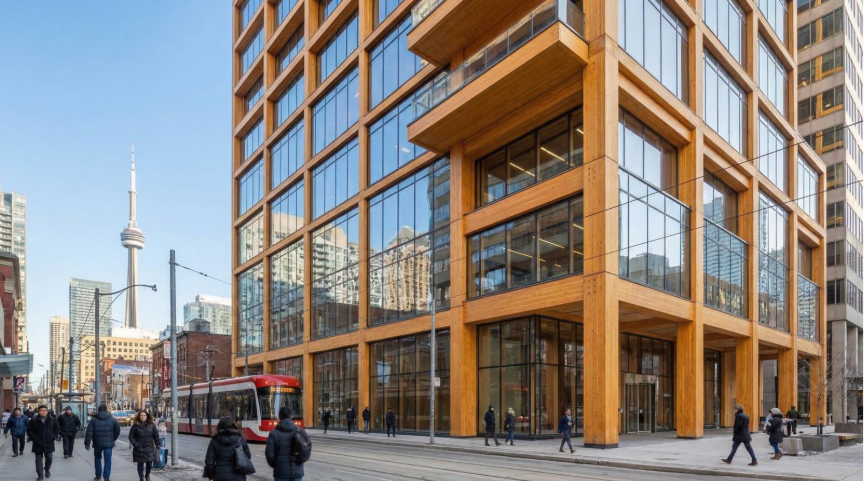
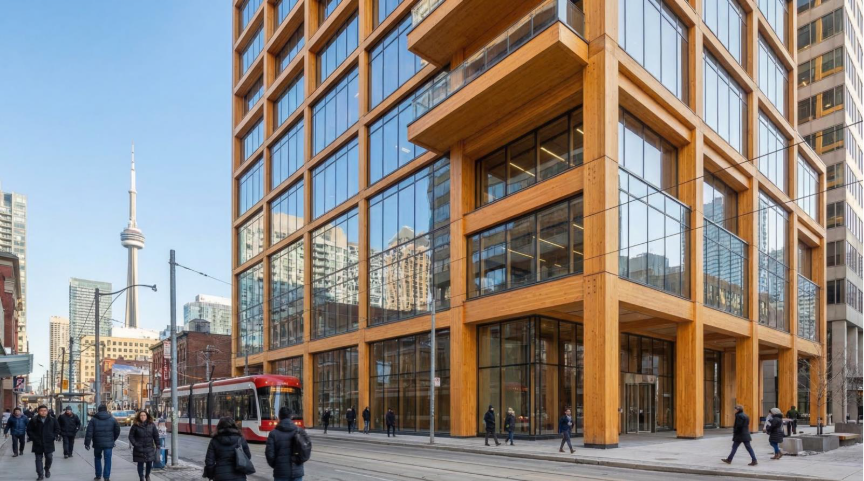
    Fig. 1 – Mass timber high-rise development in downtown Toronto

    – – –

    “Mass timber isn’t just a building material – it’s a philosophy about how we develop responsibly,” says Ladan Hosseinzadeh Sadeghi, President & CEO of Sky Property Group Inc. “Canada has a world-class forestry sector, a rigorous regulatory environment, and a genuine commitment to sustainability. Mass timber is the natural convergence of all three, and the development community needs to lean into it.”

    Canada at the Forefront

    Canada is not merely a participant in the mass timber movement – it is one of its architects. The country’s vast boreal and coastal forests provide an abundant and, when managed properly, renewable source of raw material. British Columbia has been the epicentre of innovation, home to landmark projects like the Brock Commons Tallwood House at the University of British Columbia – an 18-storey mass timber residence that, when completed in 2017, was among the tallest wood buildings in the world.

    Since then, the National Building Code of Canada has progressively updated its provisions to allow taller mass timber structures. The 2020 edition expanded the permitted height of encapsulated mass timber construction to twelve storeys, with ongoing regulatory conversations pointing toward even greater heights in future code cycles. Provincial building codes across Ontario, Quebec, Alberta, and British Columbia have largely aligned to reflect these changes, creating a more consistent national framework for developers.

    For Ladan Hosseinzadeh Sadeghi and the team at Sky Property Group, the regulatory trajectory matters as much as the material itself. “Developers operate on long time horizons,” she explains. “When you see the National Building Code moving consistently in one direction – toward greater flexibility for mass timber – that tells you where the industry is heading. Smart capital positions ahead of that curve.”

    The Sustainability Case Is Ironclad

    The environmental argument for mass timber is compelling and, increasingly, quantifiable. Concrete production is responsible for approximately 8% of global CO2 emissions, while steel manufacturing is similarly carbon-intensive. Mass timber, by contrast, sequesters carbon – trees absorb CO2 as they grow, and that carbon remains locked within the wood structure of a building for its entire lifecycle.

    Research from the University of British Columbia and other Canadian institutions has consistently found that mass timber buildings generate substantially lower embodied carbon than equivalent concrete or steel structures – often 40% to 70% lower, depending on the application. As Canadian municipalities and the federal government intensify their focus on embodied carbon in addition to operational carbon, this advantage becomes a competitive differentiator for developers.

    – – –

    Fig. 2 – Exposed CLT beams in a Canadian mass timber office interior

    – – –

    “We’re entering an era where embodied carbon will be scrutinized as carefully as energy efficiency,” says Ladan Hosseinzadeh Sadeghi. “Developers who build with mass timber now are building relationships with a regulatory environment that is only going to reward low-carbon construction more aggressively going forward. It’s not altruism – it’s strategy.”

    Beyond carbon, mass timber offers measurable benefits in construction speed, cost predictability, and worker safety. The precision manufacturing of CLT and glulam panels in controlled factory environments reduces on-site waste, shortens construction schedules, and limits the unpredictability that plagues traditional poured-concrete projects. In a Canadian market where construction cost overruns and labour shortages remain persistent challenges, these operational advantages carry real financial weight.

    Economic Opportunity Across the Value Chain

    The mass timber opportunity extends well beyond individual development projects. Canada’s forest products industry – which employs hundreds of thousands of Canadians and generates tens of billions in annual export revenue – is actively investing in mass timber manufacturing capacity. New CLT and glulam facilities have opened or expanded in British Columbia, Alberta, Ontario, and Quebec, creating a domestic supply chain that reduces both costs and lead times for developers.

    Indigenous communities and forestry partnerships represent another critical dimension of the opportunity. Many of the most significant mass timber projects in Canada are being developed in partnership with First Nations communities that hold forestry rights, creating economic development vehicles that align with reconciliation commitments while producing real estate assets of lasting value.

    “There’s an enormous opportunity to align mass timber development with Indigenous economic partnership in ways that create generational wealth for communities that have historically been excluded from the development equation,” notes Ladan Hosseinzadeh Sadeghi. “Sky Property Group is actively exploring these kinds of collaborative structures, because we believe the best development is the kind that builds communities, not just buildings.”

    Market Momentum and Investment Signals

    – – –

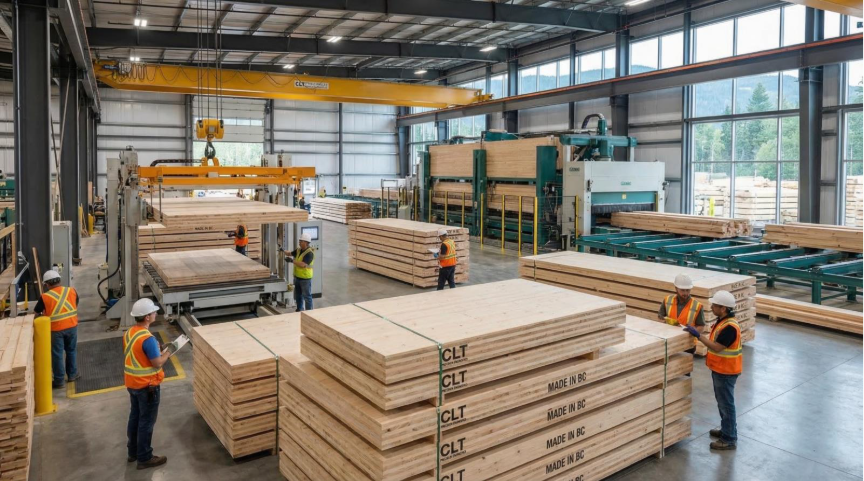
    Fig. 3 – Cross-laminated timber manufacturing facility, British Columbia

    – – –

    Institutional investors and major pension funds – among the most disciplined capital allocators in Canada – are increasingly incorporating mass timber into their real estate portfolios. The combination of ESG alignment, strong tenant demand (particularly from technology companies and progressive employers seeking distinctive, healthy workplaces), and favourable regulatory trends makes mass timber an asset class with durable appeal.

    Office and mixed-use mass timber developments consistently report higher tenant retention rates and premium rents compared to conventional construction. Residential mass timber buildings attract buyers and renters who place a premium on both aesthetic warmth and environmental credentials – a demographic segment growing rapidly across Canadian urban centres.

    – – –

    – – –

    “The market is sending a clear signal,” says Ladan Hosseinzadeh Sadeghi. “Tenants want it. Municipalities want it. The code supports it. The supply chain is maturing. For developers who are still on the fence about mass timber, I would ask: what are you waiting for?”

    Looking Ahead

    As Canada navigates the ongoing pressures of housing affordability, urban intensification, and decarbonization, mass timber represents a rare solution that advances multiple policy and market objectives simultaneously. It delivers density, sustainability, speed, and economic development in a single structural system – a combination that no other building material currently matches.

    For Ladan Hosseinzadeh Sadeghi and Sky Property Group Inc., the path forward is clear. “We are committed to integrating mass timber into our development pipeline wherever it makes sense,” she says. “Not because it’s fashionable, but because it’s the right way to build for the next fifty years in this country. Canada gave the world this material. It’s time we built our cities with it.”

    – – –

    About Sky Property Group Inc.

    Sky Property Group Inc. is a Toronto-based real estate development and property management company specializing in land assembly and high-density residential development across the Greater Toronto Area. Led by President & CEO Ladan Hosseinzadeh Sadeghi, the company is committed to sustainable, community-minded development that creates lasting value for investors, residents, and municipalities alike.

    Media Contact:
    Ladan Hosseinzadeh Sadeghi
    ladanhosseinzadehsadeghi@gmail.com

    SOURCE: Sky Property Group Inc.

    View the original press release on ACCESS Newswire

  • Canada’s Construction Labour Crisis: How the Skilled Trades Shortage Is Reshaping Real Estate Development

    TORONTO, ON / ACCESS Newswire / March 13, 2026 / Canada’s real estate development sector is facing a challenge that no amount of rezoning, financing reform, or government incentive can fully resolve on its own: a deepening shortage of skilled construction workers that is driving up costs, extending timelines, and threatening to derail the housing supply Canada so urgently needs. Industry leaders are sounding the alarm, and few are more direct about its consequences than Ladan Hosseinzadeh Sadeghi, President & CEO of Sky Property Group Inc.

    Construction activity in the Greater Toronto Area continues at pace, but labour shortages are straining project timelines.

    “We can unlock land, we can secure financing, we can get the zoning approved – but if we don’t have the workers to actually build, none of that matters,” says Hosseinzadeh Sadeghi. “The skilled trades shortage is the single most underappreciated constraint on Canadian housing supply right now, and it deserves urgent national attention.”

    The Scale of the Problem

    Canada’s construction industry is projected to need more than 299,000 new workers by 2033 to replace retiring tradespeople and meet growing demand, according to BuildForce Canada. The residential sector alone – already straining under the weight of a widely acknowledged housing crisis – faces some of the tightest labour markets in a generation. Electricians, plumbers, ironworkers, carpenters, concrete finishers, and heavy equipment operators are in short supply from Vancouver Island to Halifax.

    The consequences are measurable. Labour costs now account for an increasingly disproportionate share of total project budgets. Construction timelines that once ran 24 to 36 months for a mid-rise residential tower in the Greater Toronto Area are stretching to 40 months or beyond. And subcontractor competition for available tradespeople – particularly on high-density urban projects – has become intense enough to affect project viability.

    “We’re seeing it in every project we undertake,” says Hosseinzadeh Sadeghi. “The bids come in higher, the scheduling buffers need to be wider, and managing labour continuity has become as important as managing materials procurement. It changes the entire financial model of a development.”

    Skilled tradespeople are in high demand across Canadian construction projects as the workforce gap widens.

    A Generational Shift in the Workforce

    The roots of the crisis are demographic. Canada – like much of the developed world – saw decades of cultural messaging that steered young people toward university degrees and white-collar careers, often at the expense of skilled trades. Enrolment in apprenticeship programs declined through the 1990s and 2000s, and the workforce that entered the trades during the last major construction boom is now aging toward retirement.

    According to Statistics Canada, more than one in five construction workers in Canada is over the age of 55. As that cohort exits the workforce over the next decade, the industry faces a structural gap that cannot be closed quickly, because trades training takes time. A licensed electrician, plumber, or millwright requires years of apprenticeship. There are no shortcuts.

    “Governments have been talking about trades promotion for years, but the urgency hasn’t matched the rhetoric,” says Hosseinzadeh Sadeghi. “We’re still not doing enough at the high school level to show young Canadians that a career in the skilled trades is a path to genuine prosperity – financially rewarding, professionally satisfying, and deeply necessary.”

    Immigration: A Partial but Complex Solution

    Federal immigration policy has attempted to address the gap through targeted streams for skilled trades workers, and Hosseinzadeh Sadeghi is broadly supportive. However, she cautions that immigration alone cannot close the shortage – and that bringing in trained workers from abroad comes with its own friction. Foreign credential recognition remains a persistent barrier. A licensed electrician trained in Brazil, the Philippines, or India may spend months or years navigating provincial licensing processes before they can work in their trade in Canada.

    “Credential recognition reform is something governments at both the federal and provincial level need to prioritize,” says Hosseinzadeh Sadeghi. “We’re leaving skilled people on the sidelines while construction sites sit shorthanded. That’s a policy failure with real consequences for housing costs and housing supply.”

    Ladan Hosseinzadeh Sadeghi, President & CEO of Sky Property Group Inc., advocates for systemic trades training reform.

    Technology as a Partial Offset

    In the near term, some developers are turning to technology and innovation to offset labour constraints. Modular and panelized construction systems, which allow more building components to be fabricated off-site under controlled conditions, can reduce the on-site labour hours required per unit. Digital tools – Building Information Modelling (BIM), drone surveys, and AI-assisted project scheduling – help teams work more efficiently and reduce costly mistakes.

    “Technology can help us do more with the workers we have,” says Hosseinzadeh Sadeghi. “But it doesn’t replace the need for skilled hands on the job site. If anything, new technologies often require a higher level of expertise, not less.”

    Sky Property Group has been exploring prefabrication partnerships and is actively evaluating how off-site construction methodologies can be integrated into future project designs – not as a magic solution, but as a way to optimize performance in a constrained labour environment.

    The Policy Imperative

    Resolving Canada’s construction labour shortage will require a multi-pronged policy response: expanded and better-funded apprenticeship programs, genuine credential recognition reform, sustained trades promotion in secondary schools, and targeted immigration pathways that reduce delays for qualified foreign-trained workers. Some provinces have made meaningful moves. Ontario’s Skilled Trades Strategy has invested in awareness campaigns and streamlined some pathways to certification. But Hosseinzadeh Sadeghi believes more is needed – and faster.

    “Every month we spend not building the pipeline of future tradespeople is a month added to Canada’s housing shortage a decade from now,” she says. “The decisions governments make today about trades training and workforce development will determine whether Canada can actually build its way out of this housing crisis or just keep talking about it.”

    Toronto’s skyline reflects years of high-density development – a trend that depends on a steady pipeline of skilled construction workers.

    Looking Ahead

    For developers like Sky Property Group, the labour shortage has forced a more disciplined approach to project planning – longer lead times, deeper subcontractor relationships, and earlier engagement with trades partners to secure commitments before shovels go in the ground. It has also reinforced the importance of strong project management and operational efficiency.

    “Real estate development is ultimately about building communities,” says Hosseinzadeh Sadeghi. “And communities need homes. Homes need builders. If we don’t fix the skilled trades pipeline in Canada – and fix it seriously – we’re going to keep falling further behind. That’s not acceptable.”

    About Ladan Hosseinzadeh Sadeghi

    Ladan Hosseinzadeh Sadeghi is President & CEO of Sky Property Group Inc., a Canadian real estate development company focused on high-density residential development in the Greater Toronto Area. She is recognized as a leading voice on housing policy, urban development, and real estate investment in Canada.

    Media Contact:
    Ladan Hosseinzadeh Sadeghi
    ladanhosseinzadehsadeghi@gmail.com

    SOURCE: Sky Property Group Inc.

    View the original press release on ACCESS Newswire

  • Institutional Digital Asset Infrastructure: The Industrialization of On-Chain Credit and Neo-Bank Convergence

    NEW YORK CITY, NY / ACCESS Newswire / March 13, 2026 / Black Titan Corporation (NASDAQ:BTTC)

    Executive Summary

    The first full week of March 2026 has solidified the “Infrastructure-First” paradigm for institutional digital asset adoption. The market has transitioned from experimental pilots to the systematic deployment of “DeFi-as-a-Service” (DaaS) and “Lending-as-a-Service” (LaaS) as core backend settlement layers. Key drivers this week include the aggressive institutional scaling of the Morpho V2 architecture on Base, and the emergence of “Narrow Banking” partnerships that bridge 24/7 on-chain liquidity with traditional fiat settlement.

    1) Morpho V2: Deployment of Market-Driven Credit Pricing on Base

    The Morpho protocol has initiated the wide-scale rollout of its V2 architecture, marking a structural pivot in decentralized lending.

    • Market-Driven Rates: Morpho V2 departs from monolithic protocol-wide interest rate formulas in favor of externalized, market-driven pricing. This allows institutional curators to set bespoke terms for fixed-rate and fixed-term loans, directly addressing the volatility constraints of traditional credit desks.

    • Institutional Accumulation: Following Apollo Global Management’s ($938B AUM) strategic commitment to acquire 9% of the MORPHO supply, curated vaults on Base have seen a surge in “Lending-as-a-Service” activity. These vaults, managed by risk-modeling firms, are effectively acting as decentralized prime brokerages for institutional-grade borrowers.

    2) Neo-Bank Evolution: The Rise of “Narrow Bank” Settlement Rails

    Strategic partnerships formed this week signal the maturation of Web3-native neobanking, focusing on 24/7 programmable settlement.

    • B2B Programmable Payments: N3XT, a blockchain-powered narrow bank, announced a strategic partnership with Swiss-based Web3 platform YouHodler. This integration enables 24/7 programmable B2B payments and white-label crypto-backed lending, bypassing the constraints of traditional banking hours.

    • Stablecoin Reserve Transparency: The SEC issued finalized guidance on stablecoin reserve transparency this week, accelerating the adoption of yield-bearing stablecoin products within neobank ecosystems. This regulatory clarity is curbing “deposit flight” by allowing banks to offer compliant, yield-bearing digital asset products directly to their core clients.

    3) Real-World Asset (RWA) Tokenization: The “Base Hub” Dominance

    The Base network continues to consolidate its position as the primary settlement hub for tokenized treasury products.

    • BUIDL Fund Expansion: BlackRock’s BUIDL fund has surpassed $2 billion in AUM as of March 2026. The fund’s integration with UniswapX for secondary liquidity, coupled with its use as collateral in Morpho vaults, has created a “Tokenized-Value-as-a-Service” stack.

    • Credit Union Integration: Jack Henry’s integration of Stablecore into its network now allows over 1,600 banks and credit unions to deploy institutional-grade digital asset products. This “Infrastructure-as-a-Service” model allows smaller financial institutions to compete with global majors by leveraging pre-integrated Web3 rails.

    Market Interpretation

    The “Industrialization of DeFi” is currently defined by infrastructure invisibility. The success of the “Morpho-Base” axis suggests that the DaaS winners are those functioning as a “thick backend” for “thin frontends.” We are witnessing a Regime Shift where governance tokens are being repriced as Infrastructure Equity, attracting long-term capital that seeks to control the “TCP/IP of Debt.”

    The convergence of AI-driven analytics with these protocols (AI-driven protocol health monitoring) is further de-risking the environment for institutional capital, allowing for automated capital rotation away from platforms showing early signs of instability.

    Outlook

    In the near term, we anticipate (i) the proliferation of White-Label Neo-Bank platforms that allow any enterprise to launch a compliant Web3 bank in weeks; (ii) a shift in DeFi revenue models toward sustainable fee-based income as venture capital shifts away from traditional DeFi toward stablecoin and RWA infrastructure; and (iii) the potential for soulbound identity tokens to become the standard for on-chain KYC/AML, further reducing onboarding friction for regulated entities.

    Disclaimer

    This research note is provided for informational purposes only and does not constitute investment advice, legal counsel, or a solicitation to buy or sell any financial instruments. Digital assets involve significant risk, including smart contract vulnerability and regulatory shifts. Forward-looking statements are based on current market intelligence and are subject to change without notice.

    About Black Titan Corp (NASDAQ:BTTC) Black Titan Corp is a recent digital asset technology company focusing on the DAT+ strategy, utilizing its corporate balance sheet to support, govern, and provide liquidity to decentralized protocols. For more information, please visit https://www.blacktitancorp.com/ttdat.html.

    Media & Investor Contact
    Czhang Lin
    Co-Chief Executive Officer
    contact-us@blacktitancorp.com

    SOURCE: Black Titan Corp

    View the original press release on ACCESS Newswire

  • One Wall Street Launches B&B Italia Turnkey Collection Debuting: The Signature, The Classic and The Pied-à-Terre

    Exclusive B&B Italia Residences Offer a New Benchmark for Artful, Ready-to-Live Residences in Downtown Manhattan’s Most Coveted Addresses

    NEW YORK CITY, NY / ACCESS Newswire / March 13, 2026 / One Wall Street, the landmarked tower reimagined as Lower Manhattan’s premier luxury residential address, has just unveiled three new turnkey model residences in partnership with global leader in the high-end designer furniture sector B&B Italia.

    Left to Right: Residence 1201 and Residence 1202. Images linked here.

    The newly released model residences blend classic Art Deco architecture with contemporary Italian design, offering buyers the rare opportunity to own a fully furnished interior curated by one of the world’s most esteemed Italian design houses, all within one of Downtown Manhattan’s most iconic Art Deco buildings.

    “We are thrilled to have crafted three new model residences at One Wall Street in partnership with B&B Italia,” said Anna Zarro, One Wall Street Sales President. “One Wall Street and B&B Italia share a commitment to luxury, refined style, and exceptional lifestyle. This collaboration brings that shared vision to life, in demonstration of what we offer residents through curated design to suit their desires delivered by B&B Italia as fully equipped homes. This partnership further reinforces our reputation as the ultimate destination for design, fashion, dining, wellness, and hospitality.”

    Blending heritage architecture with innovative design in furniture and interiors, the turnkey residences offer buyers a complete home with all lifestyle needs perfectly addressed within the heart of the Financial District. Each model residence offers a distinct design and layout, including the “Pied-à-Terre” studio listed at $1.03M, the “Classic” two-bedroom listed at $3.4M, and the “Signature” three-bedroom home listed at $5.15M:

    Residence 1226 – Studio

    Residence 1226 is the perfect NYC “Pied-à-Terre” featuring high ceilings and an archetypal Manhattan attitude. Exclusively designed with the Maxalto collection, the space exudes a timeless, androgynous elegance. A neutral color palette, layered textures and structured silhouettes create a minimalist yet balanced interior. Styled like a luxury hotel suite, this studio offers a serene retreat for the jet set.

    Residence 1202 – Two Bedroom

    The “Classic”: A graciously appointed, generously proportioned two-bedroom home meets an avant-garde interior defined by bold textures and graphic elements. Residence 1202 is a space shaped by visionary thinking, where color and proportion are thoughtfully explored to create a backdrop filled with a sense of wonder. The space invites the eye to linger and the mind to stay curious. Furnished with B&B Italia, a leader in style and design, the home accentuates the key views of the surrounding iconic architecture.

    Residence 1201 – Three Bedroom

    The “Signature” three-bedroom is thoughtfully designed to include two primary suites and a private en-suite office. Residence 1201 presents a sleek, contemporary interior grounded in architectural clarity. Rich in materiality and subtle in tone, the space balances restrain with artistic expressive flair – reflecting its landmark address and views of Trinity Church while embodying the union of comfort and elegance of a family home. This residence is a celebration of B&B Italia and Maxalto, curating a layered well-traveled interior that reflects the versatility and breadth of the B&B Italia Group.

    “As B&B Italia celebrates its 60th anniversary, we have the unique privilege to unveil three distinct interior designs that deepen the power of our collective strength. One Wall Street stands as one of the most iconic addresses in Manhattan, and we are proud to have partnered with their team in shaping the new interiors of this landmark in FiDi. Curating iconic spaces is more than design – it’s an expression of lifestyle, rooted in vision and lasting impact,” said Francesco Farina, CEO of B&B Italia USA.

    “Each of the three residences echo a voice of the moment; highlighting our founding four: bold, innovative, visionary, and contemporary – all while preserving a timeless sense of style. The Signature, The Classic, and The Pied-à-Terre models were thoughtfully crafted to meet the desires of a wide yet discerning audience through carefully considered layouts and expressive designs,” said Orane Abézis, Design Director at B&B Italia USA.

    One Wall Street is the Financial District’s first true luxury residential building, distinguished by an exceptional level of service that includes more than the anticipated full‑time door staff, live‑in resident manager, and dedicated concierge services. In addition to enjoying the convenience of anchor tenant Whole Foods just downstairs, residents enjoy an expansive 100,000 square feet of amenities, thoughtfully designed to support effortless living, wellness, and connection. Highlights include The One Club, an intimate private restaurant, bar and terrace set on the 39th floor with skyline, NY Harbor and Statue of Liberty views – reserved exclusively for residents and their guests, The One Sky Pool on the 38th floor with wraparound outdoor terrace; The One Gym, a fully equipped fitness center; The One Playroom; The One Pet Spa; and One Works – a 6,500‑square‑foot co‑working space and business lounge complete with private podcast rooms and thoughtfully designed spaces for focus, flexibility, and collaboration. Residents also enjoy complimentary membership and direct priority access to Life Time, the building’s four-level, 75,000-square-foot athletic country club – a premier destination for fitness, wellness, recovery, and lifestyle programming, as well as exclusive access and special services from Printemps New York, the luxury Parisian retailer that is home to Salon Vert, Café Jalu, The Red Room Bar, and Maison Passerelle – all just an elevator ride away.

    About One Wall Street

    One Wall Street is a 51-story Art Deco landmark in Lower Manhattan located to the east of Broadway and adjacent to the New York Stock Exchange. Built in 1931 for the Irving Trust Company as designed by architect Ralph Walker, One Wall Street has been transformed by Macklowe Properties into a luxury condominium building in the most ambitious and successful office-to-residential conversion in the history of New York City. One Wall Street offers unobstructed views of New York Harbor and the Statue of Liberty, comprising loft studio to four-bedroom homes and a triplex penthouse at its crown, with 174,000 square feet of retail space at its base and 100,000 square feet of amenity space within. For more information, please visit www.onewallstreet.com.

    For media inquiries, please reach out to onewallstreet@optimistconsulting.com.

    About B&B Italia Group

    B&B Italia is an internationally renowned Italian Group leader in the high-end designer furniture sector. The B&B Italia Group works in the residential and contract sectors (hospitality, retail, offices and nautical) with its three brands, B&B Italia, Maxalto and Azucena. Each brand has its unique identity in which design, research, creativity, and technology develop together, interpreting contemporary lifestyle and trends.

    Its headquarters in Novedrate (Como) was designed in 1971 by Renzo Piano and Richard Rogers. The company has a presence in more than 80 countries through 10 flagship stores in London, Paris, Monaco, Milan, New York, Washington, D.C., Dallas, Miami and Boston, 60 single-brand stores and 700 specialised stores. Nowadays, foreign markets account for around 80% of the Company’s revenues.

    The mission of B&B Italia Group is to create the most innovative, iconic, and timeless pieces of design furniture in order to inspire people around the globe through the power of the best creative minds, unparalleled R&D, industrial know-how and made-in-Italy quality that make the Group one of the world’s premier design companies.

    From the beginning, B&B Italia has availed itself of the collaboration of the most prestigious international designers. These strong relationships have always been key factors in the strategic development of the company and of its lifestyle. Together with them, the company has made a significant contribution to the design culture and to the history of Italian design throughout the world. B&B Italia has been honored numerous awards in its history including the five-time win of the most coveted award in Italian industrial design – the “Compasso d’Oro.”

    Since November 2018, B&B Italia is part of Flos B&B Italia Group, a leading global high-end design group operating a number of legacy brands in the world of luxury furnishings and lighting, with a European cultural heritage. Driven by a purpose of “We design for a beautiful life”, the Group designs for the planet, people, and culture. The Group includes FLOS, B&B Italia, Louis Poulsen, Maxalto, Arclinea, Azucena, Audo and Lumens. www.flosbebitaliagroup.com

    For media inquiries, please reach out to:

    Laura Confalonieri / Barbara Carraretto
    press.lounge@bebitalia.it
    T. +39 031 795 327 / 343

    USA – Karla Otto
    BeBItaliaUS@karlaotto.com

    SOURCE: One Wall Street

    View the original press release on ACCESS Newswire

  • SMX’s Molecular Traceability Technology Strengthens Verification Across Global Oil and Gas Supply Chains

    NEW YORK CITY, NY / ACCESS Newswire / March 13, 2026 / As geopolitical tensions, sanctions enforcement, and shifting trade alliances continue to reshape global oil and gas markets, protecting the enormous financial value embedded in energy supply chains has become an increasing priority. SMX (Security Matters) PLC (NASDAQ:SMX) is helping address this challenge through its molecular traceability technology, which enables oil, fuels, and other energy materials to carry a verifiable identity as they move through complex global supply networks.

    Each year, trillions of dollars in crude oil, refined fuels, and petrochemical products move through a vast international infrastructure of wells, pipelines, refineries, tankers, storage terminals, and trading hubs. Within this highly interconnected system, verifying the origin, authenticity, and handling of these materials is becoming increasingly important as regulatory oversight grows and supply chains become more complex.

    A new generation of verification tools is emerging to meet this need by attaching identity directly to the materials themselves.

    SMX has developed a molecular traceability platform that embeds invisible molecular markers into physical commodities. Once applied, these markers allow materials such as crude oil, refined fuels, petrochemicals, and other industrial inputs to carry a durable and verifiable identity throughout their entire lifecycle-from extraction and transportation to refining, blending, storage, and final delivery.

    This approach represents a shift away from traditional verification systems that rely heavily on documentation. Historically, commodity markets have depended on paperwork, certificates, and digital records that travel separately from the physical materials they describe. In complex global trading environments, those records can sometimes become altered, misplaced, or disconnected from the commodities themselves.

    By embedding identifiers at the molecular level, SMX’s technology allows participants across the energy ecosystem to confirm origin and monitor chain-of-custody with greater certainty. The molecular markers are linked to a secure digital platform that records the lifecycle of the material, creating a comprehensive and verifiable audit trail across the supply chain.

    For producers, refiners, traders, and investors, the implications are significant. The ability to authenticate commodities and verify their movement through international markets can help reduce fraud, limit exposure to sanctions violations, and strengthen confidence in high-value energy transactions.

    Even small uncertainties about a shipment’s origin or handling can introduce financial risk in markets where cargoes often change hands multiple times before reaching end users. Verification systems that connect identity directly to the material itself provide an additional safeguard against substitution, mislabeling, and supply-chain manipulation.

    As regulatory expectations grow around sanctions enforcement, carbon reporting, and supply-chain transparency, technologies capable of verifying the provenance of physical materials are becoming increasingly important to global trade.

    While the energy sector represents a major application for this technology, its potential extends far beyond oil and gas.

    SMX’s molecular traceability platform can be applied across a wide range of industries where origin verification and authenticity are essential, including precious metals and mining, industrial metals such as steel and aluminum, plastics and circular materials, industrial rubber, luxury goods and textiles, agricultural commodities, and semiconductors and electronics.

    By linking molecular identifiers embedded in physical materials with digital verification systems, the platform creates what the company describes as a physical-to-digital identity layer for global commerce. This capability allows stakeholders-from producers and manufacturers to regulators and financial institutions-to verify provenance, track transformations during processing, and maintain reliable records across complex supply networks.

    As geopolitical uncertainty and regulatory pressure continue to reshape global markets, technologies that enhance transparency, protect asset value, and secure supply chains are increasingly becoming an important component of the infrastructure supporting international trade.

    ABOUT SMX (SECURITY MATTERS) PLC

    SMX (Security Matters) PLC (NASDAQ:SMX) develops molecular traceability and material authentication technologies designed to strengthen supply-chain transparency and integrity across global industries. Its platform embeds invisible molecular markers directly into physical materials-including solids, liquids, and gases-allowing them to carry a persistent identity that can be detected and verified throughout their lifecycle.

    Combined with proprietary reader systems and a secure digital verification infrastructure, the technology enables organizations to maintain auditable records of origin, composition, and supply-chain history. These capabilities support authentication, regulatory compliance, sustainability reporting, recycling verification, and circular-economy initiatives across sectors including energy, metals and mining, plastics and circular materials, industrial rubber, semiconductors, textiles, luxury goods, and agriculture.

    Contact: Jeremy Murphy/ jeremy@360bespoke.com

    SOURCE: SMX (Security Matters) Public Limited

    View the original press release on ACCESS Newswire

  • Luminar Media Group – Fortun – Provides General Business Update on Corporate Initiatives

    MIAMI, FL / ACCESS Newswire / March 13, 2026 / Luminar Media Group, Inc. (OTCID:LRGR) (“Luminar” or the “Company”), a diversified financial holding company focused on revenue-based financing solutions for small and mid-sized businesses and operating under the Fortun brand, today provided a general business update addressing certain previously disclosed corporate initiatives.

    Corporate Name and Ticker Symbol Alignment
    The Company expects to implement its previously disclosed corporate name change and ticker symbol change in the near term. Any related ticker symbol change will remain subject to applicable approvals, regulatory processing, and customary public disclosure.

    At this time, the Company notes that no reverse stock split is being undertaken concurrently with the contemplated name and ticker symbol change.

    Registration Statement Process Update
    As previously disclosed, the Company has confidentially submitted a draft registration statement (DRS) on Form S-1 to the SEC for review. The Company received the initial SEC response on February 10th, 2026. The review process is ongoing. Because the submission remains nonpublic at this stage, the Company does not intend to provide further comment regarding that process except as may be required by applicable law or in connection with any future public filing.

    A draft submission for nonpublic review does not appear on EDGAR unless and until the registration statement is publicly filed.

    Audit and Year-End Financial Reporting Update
    The Company previously announced that audited financial statements for fiscal years 2023 and 2024 were completed and included in its initial confidential registration statement submission materials.

    As part of the ongoing review process, audited financial statements for fiscal year 2025 will also be required for inclusion in the registration statement materials.

    The Company is currently working with its independent auditors to complete the 2025 audit. However, because this period coincides with a high volume of reporting deadlines for many issuers and service providers, the Company has been advised by its auditor that completion may occur later, with the current expectation being no later than the end of April 2026, although timing remains subject to change.

    Accordingly, the Company currently expects to file its fiscal year 2025 year-end disclosure with OTC Markets by the March 31, 2026 deadline in accordance with the OTC Markets Alternative Reporting Standard under which the Company currently reports. If the initial filing is submitted on an unaudited basis, the Company expects to subsequently amend or supplement that disclosure once the audit is completed.

    Upon completion of the audit, the Company intends to update its disclosure record and any registration statement materials as appropriate. Timing remains subject to completion of audit procedures and the SEC review process.

    Board Composition and Governance
    As previously announced, the Company appointed Juan M. Sese as Chief Financial Officer.

    In addition, the Company is actively evaluating executive and board-level candidates as part of its broader governance planning. Board questionnaires and related diligence processes have been initiated in coordination with counsel as the Company assesses potential director candidates, including individuals who may satisfy independence standards applicable to a national securities exchange.

    Any such appointments, if made, will be publicly announced through the Company’s standard disclosure channels.

    Credit Facility Initiative
    The Company recently disclosed that it is exploring the establishment of a potential credit facility or line of credit. Any such financing, if obtained, would be intended to supplement, and not alter, the Company’s previously announced business strategy.

    Management stated that the primary objective of such a facility would be to provide additional non-dilutive capital that could expand the Company’s capacity to fund small-business receivables through its platform. There can be no assurance that any such facility will be obtained or, if obtained, on what terms.

    Management Commentary
    Management stated that the Company is focused on its ongoing operations and on the evaluation and execution of previously disclosed corporate initiatives, subject to applicable approvals and market conditions. Except as described above, the Company is not announcing any additional material corporate developments at this time.

    About Luminar Media Group, Inc.
    Luminar Media Group, Inc. (OTCID:LRGR), through its subsidiaries operating under the Fortun brand (FortunCo, LLC; Fortun Advance, LLC; Fortun Funding, LLC; Fortun Online, LLC and affiliates), provides revenue-based financing solutions primarily to small and medium-sized businesses across the United States. The Company’s mission is to empower underserved entrepreneurs – particularly within Latino and minority business communities – by offering accessible, transparent, and data-driven capital alternatives. Fortun’s technology-enabled platform evaluates ACH activity, sales data, and other financial indicators to deliver rapid funding decisions and support sustainable growth.

    For more information: www.fortunco.com

    CONTACT:
    Hayden IR
    James Carbonara
    (646) 755-7412
    james@haydenir.com

    Forward-Looking Statements
    This press release is provided solely as a general business update and does not constitute an offer to sell or the solicitation of an offer to buy any securities.

    Certain statements contained herein are forward-looking statements, including but not limited to statements regarding the Company’s anticipated audit timing, financial reporting plans, potential corporate name or ticker symbol changes, possible reverse stock split considerations, board composition efforts, credit facility discussions, registration statement process, and any potential uplisting or national exchange strategy.

    These forward-looking statements are based on current expectations, assumptions, and internal planning, all of which are subject to substantial risks, uncertainties, regulatory review, market conditions, third-party actions, and other factors, many of which are outside the Company’s control. There can be no assurance that any audit will be completed by any particular date, that any registration statement will become effective, that any financing facility will be secured, that any corporate action will occur, or that the Company will satisfy the requirements for or successfully complete any uplisting or exchange listing.

    Readers are cautioned not to place undue reliance on forward-looking statements, which speak only as of the date made. The Company undertakes no obligation to update these statements except as required by applicable law.

    SOURCE: Luminar Media Group, Inc.

    View the original press release on ACCESS Newswire

  • Wellgistics President Releases Letter to Shareholder on Emerging Patient Care-Centric Strategic Direction

    TAMPA, FL / ACCESS Newswire / March 13, 2026 / Wellgistics Health, Inc. (NASDAQ:WGRX) (“Wellgistics”), a health information technology leader, integrating proprietary pharmacy dispensing optimization artificial intelligence (AI) platform EinsteinRx™ into its patented blockchain-enabled smart contracts platform PharmacyChain™, today announced that its President & Interim-CEO Prashant Patel, RPh released a letter to shareholders.

    The prescription drug and broader healthcare landscapes in the United States are rapidly changing. From the direct involvement of the federal government in providing discount cards for prescription drugs via to direct to consumers (DTC) online platform TrumpRx, to major pharmaceutical manufacturers offering prescription obesity drugs DTC through their own online pharmacies, to increasing percentages of patients receiving prescriptions for obesity and other drugs from physicians through telemedicine, it is clear that technology is rapidly changing how Americans engage with the healthcare system. This emerging shift in the healthcare market that gained significant momentum during the height of the COVID-19 pandemic has significant long-term consequences for independent pharmacies and providers throughout the country.

    Here at Wellgistics Health, we have been evaluating how best to leverage our pharmaceutical distribution businesses and deep healthcare relationships to position ourselves for the healthcare system tomorrow. After thorough review, we have determined that the best path forward for us is to transition our focus towards becoming a seller of prescription drugs and related services directly to patients via the Company’s online pharmacy, and to leverage our relationships with independent pharmacies and other more local service providers to coordinate patient care with a view towards expanding the scope of our industry-leading EinsteinRx artificial intelligence hub platform to enable its use in areas beyond prescription drug dispensing optimization, towards optimization of patient outcomes.

    To this end, we have been strategically expanding marketing and healthcare technology relationships in preparation for this new direction. Our emerging partnership with NFL Alumni Health is set to provide us with access to a uniquely positioned group of influencers with unparalleled brand awareness and trust, capable of generating deep consumer engagement that we believe will help us elevate our new message to consumers throughout the United States in the second half of the year as football season kicks into gear. We have exclusively licensed technology from DataVault AI in preparation for the deployment of the Company’s proprietary drug serialization solution PharmacyChain™ that will allow us not only to tokenize prescription drug data, but also data of each data aspect required for a prescription drug to be dispensed – which includes the aggregation of electronic patient records (EHD) data such as prior diagnoses, diagnostic testing results and other key data. We recently gained access to a proprietary lower-cost eligibility and benefits verification tool sufficiently attractive to compete for pharmacy and partner verification business in anticipation of the deployment of PharmacyChain so that there is an immediate incentive for partners to work with us as we begin to expand our healthcare ecosystem beyond pharmacy.

    We are also leveraging our deep understanding of pharmacy science to position ourselves on the side of patients with respect to mitigating the side effects of prescription drugs in rapidly growing and large underserved medical conditions. To this end, the Company’s partnership with Tollo Health has positioned us to target two large chronic conditions that currently experience incomplete outcomes and/or side effects from currently approved prescription drug solutions with the over 36 million+ (12%+ of US population)[1] & growing diabetic and/or obese patients currently on GLP-1 medication via medical food Forzet™ and the over 18 million+ (6% of US population)[2] suffering from Long COVID via 3CL protease cleansing dietary supplement Tollovid™. Additionally, Tollo has natural medical food product Galectovid™ that is targeted towards the 6-10 annual viral infections each American (300 million+)[3] contracts, the vast majority of which are left untreated and have been increasingly linked to later-in-life chronic diseases such as cancer, Alzheimer’s disease and multiple sclerosis.

    While we have made strides in this new direction, with the longer-term and medium terms outlook shaping up nicely, we are now preparing to focus on the immediate term execution phase that will position us to be able to complete this shift. To this end, we are actively preparing our telemedicine and diagnostic testing strategies, aiming to develop a closed-loop ecosystem that pharmaceutical manufacturing and other partners will be attracted to as a result of the marketing power, data generation and patient flow capabilities that will build value for their brands. We are also engaged with payers who have expressed a strong interest in being able to help shape our PharmacyChain solution to help solve key inefficiencies that currently plague the US healthcare system and result in higher costs with poor outcomes and expect to secure relationships that will allow us to begin to deploy our emerging solutions in a stepwise fashion, initially around mitigating GLP-1 related muscle loss.

    We strongly believe that now is the time to take these decisive actions so that we can retool our offering for the future. We intend to fortify our relationships with the Wellgistics Pharmacy Network by making available many more tools to help pharmacists manage their patients, and expect that as pharmacies are able to confidently expand their service offerings, we will be able to enable them with products and relationships they would otherwise not have access to alone, strengthening our value proposition to them via new revenue streams at a time of compressing margins and making them an extension of our own offering where appropriate.

    We believe in our mission, cognizant of the broader changes in the healthcare landscape and clear-eyed with respect to the challenges ahead.

    Thank you for taking the time to read this letter, for being a shareholder and for joining us in our journey to revolutionize healthcare in America.

    About Wellgistics Health, Inc.

    Wellgistics Health (NASDAQ:WGRX) is a health information technology leader, integrating proprietary pharmacy dispensing optimization artificial intelligence platform EinsteinRx™ into its patented blockchain-enabled smart contracts platform PharmacyChain™ to optimize the prescription drug dispensing journey. Its integrated platform connects 6,500+ pharmacies (the “Wellgistics Pharmacy Network”) and 200+ manufacturers, offering wholesale distribution, digital prescription routing, direct-to-patient delivery, and AI-powered hub services such as eligibility, adherence, onboarding, prior authorization, and cash-pay fulfillment as needed to optimize patient access. Wellgistics provides end-to-end solutions designed to restore access, transparency, and trust in the U.S. prescription drug market for independent pharmacies.

    For more information, visit www.wellgisticshealth.com.

    Forward-Looking Statements

    This press release contains “forward-looking statements” within the meaning of the Private Securities Litigation Reform Act of 1995. Forward-looking statements generally relate to future events or the Company’s future financial or operating performance and may include, without limitation, statements regarding the anticipated launch, availability, distribution, commercialization and potential adoption of Forzet™, the expected benefits of the product, the Company’s plans to integrate Forzet into its pharmacy network and telehealth offerings, the development and expansion of the Company’s direct-to-consumer initiatives, and the potential growth of the GLP-1 agonist market. In some cases, forward-looking statements can be identified by terminology such as “may,” “will,” “should,” “expects,” “plans,” “anticipates,” “believes,” “intends,” “estimates,” “projects,” “potential,” “continue,” or the negative of these terms or other comparable terminology.

    Forward-looking statements are based on current expectations, estimates and assumptions and involve risks and uncertainties that could cause actual results to differ materially from those expressed or implied by such forward-looking statements. These risks and uncertainties include, among other things, risks related to the commercialization and market acceptance of the Company’s products and services, the Company’s ability to successfully expand its pharmacy network and telehealth initiatives, regulatory and compliance considerations relating to medical foods and healthcare products, competition in the healthcare and pharmaceutical distribution markets, changes in market conditions, and other risks and uncertainties described from time to time in the Company’s filings with the U.S. Securities and Exchange Commission.

    Forward-looking statements speak only as of the date of this press release, and the Company undertakes no obligation to update or revise any forward-looking statements, whether as a result of new information, future events or otherwise, except as required by law. The Company makes no representation that Forzet™ is intended to diagnose, treat, cure, or prevent any disease.

    [1] https://www.statista.com/chart/35919/key-figures-usage-and-opinion-glp-1-medication-weight-loss-drugs-in-the-united-states/#:~:text=In%20mid/late%202025%2C%2012.4,surveyed%20in%202024%20and%202025.

    [2] https://www.hhs.gov/longcovid/index.html

    [3] https://pmc.ncbi.nlm.nih.gov/articles/PMC10116010/

    Wellgistics Media & Investor Contact:

    Media:
    media@wellgisticshealth.com

    Investor Relations:
    IR@wellgisticshealth.com

    SOURCE: Wellgistics Health, Inc.

    View the original press release on ACCESS Newswire