Category: Accesswire

  • From Vacant Storefronts to New Homes: How Canada’s Dying Malls Are Becoming the Answer to the Housing Crisis

    TORONTO, ON / ACCESS Newswire / March 15, 2026 / Across Canada, a quiet transformation is reshaping the commercial real estate landscape – and potentially unlocking one of the country’s most creative solutions to its chronic housing shortage. Empty department stores, struggling suburban malls, and vast underutilized parking lots are becoming the raw material for mixed-use communities, purpose-built rentals, and affordable housing projects. For Ladan Hosseinzadeh Sadeghi, President & CEO of Sky Property Group Inc., this shift represents not just a smart investment thesis, but a necessary evolution in how Canadians think about urban land.
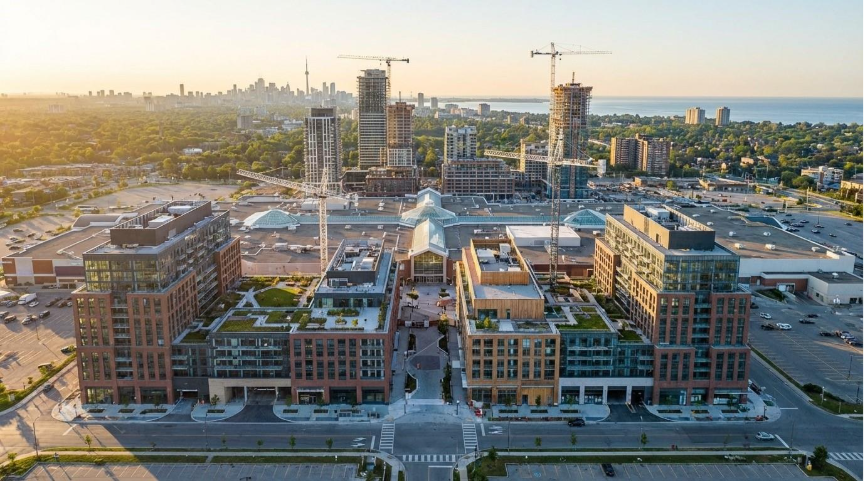
    “We have spent decades building out in every direction, and now we are sitting on enormous tracts of underutilized commercial land in the most desirable, serviced parts of our cities,” says Hosseinzadeh Sadeghi. “Adaptive reuse isn’t a workaround – it is one of the most pragmatic and responsible paths forward for housing supply in Canada.”

    A National Opportunity Built on Vacant Square Footage

    The numbers are striking. Canada lost hundreds of department stores and anchor tenants over the past decade, accelerated by the seismic shift toward e-commerce and further disrupted by the COVID-19 pandemic. Retail vacancy rates in many suburban markets remain elevated, and industry analysts estimate that millions of square feet of formerly productive commercial space sits dormant or dramatically underperforming from coast to coast.

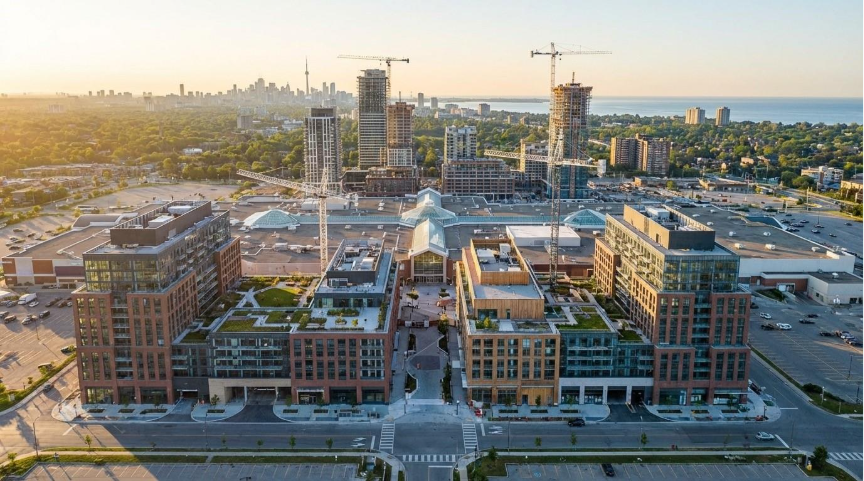
    Malls once anchored by Sears, Target, and Hudson’s Bay are now half-empty monuments to a retail era that has passed. But these properties carry something extremely valuable: they sit on large, fully serviced lots with existing road access, utilities, transit proximity, and zoning designations that can often be amended to allow higher-density residential or mixed-use development.

    “When I look at a struggling suburban mall, I see fully serviced land in an established neighbourhood,” says Hosseinzadeh Sadeghi. “That is incredibly rare in any major Canadian city today. The infrastructure is already there – water, sewer, roads, power. The community is already there. What’s missing is vision and political will to rezone and redevelop.”

    The Economics of Conversion

    Adaptive reuse – converting existing structures or redeveloping underutilized commercial sites – is gaining traction with developers, municipal planners, and institutional investors alike. Unlike office-to-residential conversion, which often faces structural and mechanical challenges, large-format retail and surface parking lots offer relatively flexible canvases for reinvention.

    The economics vary widely. Some conversions involve gutting and retrofitting existing mall structures into residential lofts, co-living spaces, or community hubs. Others involve full demolition of aging retail boxes to unlock the land beneath for purpose-built mid-rise or high-rise residential towers. In both cases, the savings on land servicing and site preparation can be significant compared to greenfield development.

    Cities such as Calgary, Edmonton, and Ottawa have already seen adaptive reuse projects emerge from former big-box retail sites. Calgary’s “City Centres” policy actively encourages the conversion of underperforming strip malls and regional malls into dense, walkable, mixed-income communities – and the city’s Housing Accelerator Fund commitments have reinforced this direction.

    “What Calgary has shown is that when the political framework is aligned – when municipalities are willing to rezone quickly and incentivize adaptive reuse – the private sector responds,” says Hosseinzadeh Sadeghi. “The federal Housing Accelerator Fund was a step in the right direction. We need more of that alignment between all levels of government.”

    Zoning Reform as the Unlocking Mechanism

    The single greatest barrier to retail-to-residential conversion is often not structural or financial – it is zoning. Commercial land has traditionally been designated for commercial use, and rezoning it to allow residential development requires political engagement, community consultation, and navigating complex municipal approval processes.

    Hosseinzadeh Sadeghi is an advocate for streamlining this pathway. “We cannot afford, as a country, to leave viable development sites locked in outdated zoning categories while families are living in substandard housing or paying half their income in rent,” she says. “Every abandoned parking lot next to a subway station is a policy failure. It doesn’t have to be.”

    Several provinces are moving in this direction. Ontario’s recent legislative updates around major transit station areas, and British Columbia’s sweeping upzoning legislation, signal a growing recognition that commercial-to-residential conversions must be enabled at scale. Hosseinzadeh Sadeghi believes the next frontier is proactive, municipality-wide commercial land audits – systematic reviews of underperforming retail zones to identify sites ready for residential intensification.

    Mixed-Use as the Gold Standard

    The most successful adaptive reuse projects don’t simply trade one use for another – they layer them. A former mall site might become a community with ground-floor retail, grocery, and services; mid-floors of purpose-built rental apartments; upper floors of market condominiums; a central green space or community park; and integrated childcare or healthcare facilities.

    “Mixed-use is not a buzzword – it is what communities actually need,” says Hosseinzadeh Sadeghi. “When we design for a single use, we create fragile environments. When we design for 24-hour life – where people can live, shop, work, and socialize within walking distance – we create resilience. And we create value.”

    Sky Property Group’s approach to intensification projects emphasizes this layered model, recognizing that economic viability and community benefit are not mutually exclusive goals.

    Sustainability and the Carbon Case

    Beyond the housing rationale, adaptive reuse carries a powerful environmental argument. New construction generates significant embodied carbon – the emissions locked into building materials from extraction, manufacturing, and transportation. Reusing existing structures, or redeveloping previously disturbed land rather than greenfield sites, dramatically reduces a project’s embodied carbon footprint.

    “From a sustainability standpoint, the most environmentally responsible building is often the one that already exists,” says Hosseinzadeh Sadeghi. “When we can reuse, retrofit, or redevelop on already-disturbed land, we are making a climate decision as much as a housing decision.”

    Canada’s green building sector is increasingly incorporating lifecycle carbon analysis into project assessments, and adaptive reuse scores well on these metrics – a factor that is becoming increasingly important to institutional investors with ESG mandates.

    A Call for Coordinated Action

    Hosseinzadeh Sadeghi is direct about what is needed to unlock Canada’s adaptive reuse potential at scale: coordination. Between federal housing policy and municipal zoning. Between developers and community groups. Between public financing tools and private capital.

    “The sites exist. The demand exists. The capital exists,” she says. “What we need is alignment – and the courage to move quickly. Canada’s housing crisis is not waiting for a perfect plan. We have to act with the tools we have, on the land we have, right now.”

    For Ladan Hosseinzadeh Sadeghi and Sky Property Group Inc., the opportunity embedded in Canada’s struggling retail landscape is not a last resort – it is a first priority.

    About Sky Property Group Inc.

    Sky Property Group Inc. is a Canadian real estate development company focused on land assembly, high-density residential development, and urban intensification across the Greater Toronto Area and other major Canadian markets. Led by President & CEO Ladan Hosseinzadeh Sadeghi, the company is committed to innovative, community-centred development that addresses Canada’s housing supply challenges.

    Media Contact:
    Ladan Hosseinzadeh Sadeghi
    ladanhosseinzadehsadeghi@gmail.com

    SOURCE: Sky Property Group Inc.

    View the original press release on ACCESS Newswire

  • Building for Tomorrow: How Canadian Real Estate Must Adapt to a Changing Climate

    TORONTO, ON / ACCESS Newswire / March 15, 2026 / Canada is facing a new reality. Flooding in the Fraser Valley. Record-breaking ice storms across Southern Ontario. Wildfire smoke choking Prairie cities. Coastal erosion eroding neighbourhoods in Atlantic Canada. The evidence is no longer abstract – extreme weather events are arriving faster, hitting harder, and costing more than anything Canadian cities were built to withstand. For the real estate development industry, the question is no longer whether climate risk matters. It is how quickly the sector can adapt before the next disaster rewrites the ledger.

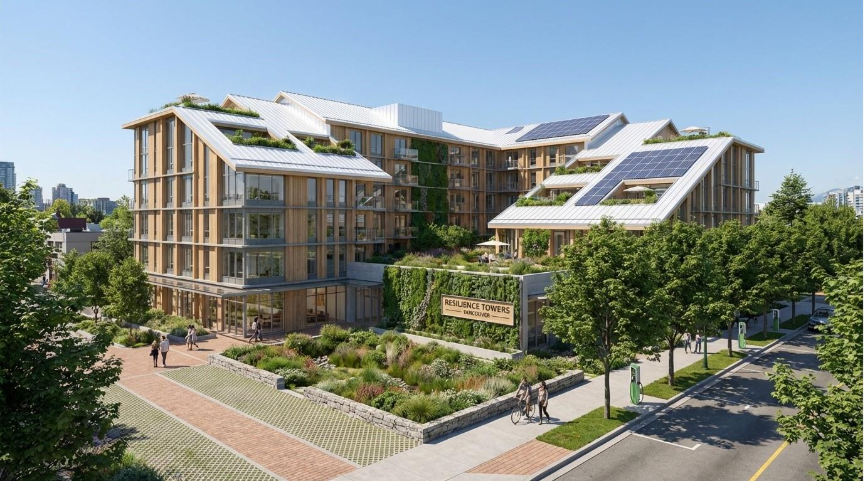
    Canadian cities are integrating green infrastructure to combat climate change.

    Ladan Hosseinzadeh Sadeghi, President & CEO of Sky Property Group Inc., has been at the forefront of this conversation in Canada’s development community. For her, climate resilience is not a niche concern for environmental advocates – it is a fundamental pillar of sound real estate strategy.

    “The developers who will succeed in the next twenty years are the ones treating climate risk like any other underwriting factor,” says Hosseinzadeh Sadeghi. “If you’re not modelling flood plains, heat island effects, and extreme weather risk into your pro formas today, you’re building on assumptions that no longer hold.”

    The Cost of Inaction Is Already Here

    The financial stakes are becoming undeniable. According to the Insurance Bureau of Canada, insured catastrophic losses exceeded $8 billion in 2024 – one of the costliest years on record for the industry. Insurers are beginning to withdraw coverage from flood-prone and wildfire-adjacent zones, and mortgage lenders are growing increasingly cautious about properties in high-risk areas.

    For the real estate sector, this insurance retreat has immediate implications. Properties that cannot be insured cannot be financed. Properties that cannot be financed cannot be sold. The feedback loop is brutally efficient, and developers who have not stress-tested their portfolios against this new reality are carrying risks they may not even be able to quantify.

    “We’ve seen whole streets in Ontario and British Columbia where property values have softened materially because insurers are pricing in flood risk that wasn’t part of the calculus five years ago,” notes Hosseinzadeh Sadeghi. “That’s not a future problem. It’s a present one.”

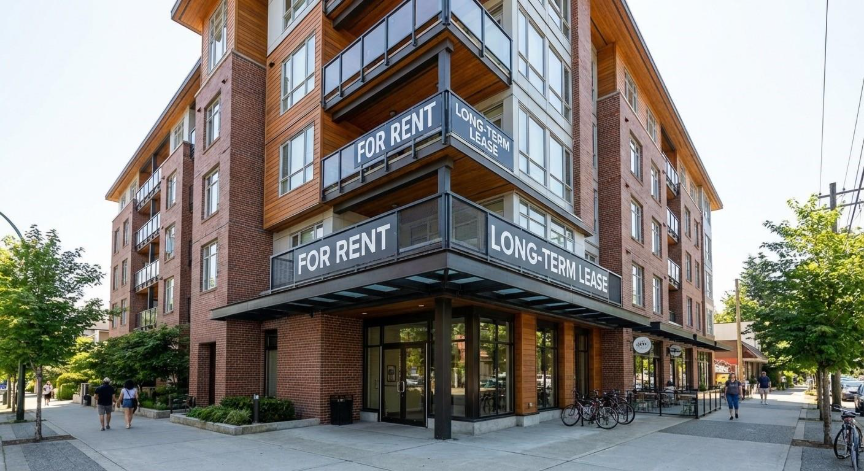
    Extreme weather events are increasing the financial risk profile of Canadian real estate.

    What Adaptive Development Actually Looks Like

    Climate-resilient building is not a single intervention – it is a design philosophy that must be woven into every stage of the development process, from site selection to engineering to long-term asset management.

    At the site selection stage, developers and investors are increasingly consulting updated floodplain maps, Natural Resources Canada’s climate risk data layers, and municipal stormwater infrastructure assessments before acquiring land. The days of relying solely on historical data are over; the question now is what a given site will look like in 2050, not 2005.

    At the engineering and construction stage, climate-adaptive design encompasses a wide range of interventions: elevated building pads and flood barriers in low-lying areas; green roofs and permeable paving to manage stormwater runoff; passive cooling systems and reflective materials to combat urban heat islands; and backup power systems designed to keep buildings operational during grid disruptions triggered by extreme weather.

    “Good climate-resilient design is often invisible to the end user,” says Hosseinzadeh Sadeghi. “People notice when a building is comfortable and dry. They don’t necessarily see the permeable paving or the retention pond that made that possible. That’s by design. Our job as developers is to solve the problem before it becomes someone’s crisis.”

    The Policy Dimension: Canada’s Regulatory Landscape Is Shifting

    Government at every level is beginning to respond. The federal government’s recent investments through the National Adaptation Strategy and the Climate-Resilient Buildings and Core Public Infrastructure Initiative signal a policy direction that will increasingly shape the development sector. New building codes are being drafted with climate considerations embedded, and municipalities from Calgary to Halifax are updating their zoning bylaws to restrict development in high-risk flood zones and mandate resilience features in new construction.

    “When the federal government publishes a national adaptation strategy, it’s telling the development industry where the regulatory floor is moving,” says Hosseinzadeh Sadeghi. “The smart money doesn’t wait for the floor to arrive – it builds to where the standard will be and gains a five-year head start on the competition.”

    Ladan Hosseinzadeh Sadeghi, President & CEO of Sky Property Group Inc., champions climate-adaptive development

    The Investment Opportunity

    For investors and institutional capital, climate resilience is rapidly becoming a performance criterion rather than a social preference. ESG-aligned funds, pension capital, and major real estate investment trusts are now conducting climate risk assessments on potential acquisitions, and the market is beginning to price the gap between resilient and non-resilient assets.

    This presents an explicit opportunity for developers who are willing to invest in climate-adaptive design today. The premium commanded by green-certified, resilience-rated buildings is growing – and as extreme weather events continue to make headlines, the discount applied to properties deemed high-risk will deepen.

    “There’s a bifurcation happening in Canadian real estate,” observes Hosseinzadeh Sadeghi. “On one side, you’ll have buildings that are built for the climate we’re actually entering – well-insulated, flood-resistant, energy-independent, insurable. On the other side, you’ll have legacy stock that becomes increasingly difficult and expensive to maintain, finance, and sell. The gap between those two categories is going to widen dramatically over the next decade.”

    Climate-resilient building design is becoming a competitive advantage in Canadian real estate.

    Building for the Long Arc

    Canada’s real estate sector has always been shaped by its geography – the vast distances, the brutal winters, the spectacular but demanding landscape. What is changing now is the pace and intensity of that relationship. The climate is not slowly drifting; it is accelerating, and the built environment must accelerate its response.

    For Ladan Hosseinzadeh Sadeghi and Sky Property Group Inc., this means making climate resilience a non-negotiable design standard on every project – not as an add-on or a marketing statement, but as a foundational commitment to the communities these buildings will serve for generations.

    “We don’t build for the next five years,” she says. “We build for the next fifty. If you hold that frame, climate resilience isn’t a luxury. It’s the only responsible way to develop.”

    About Sky Property Group Inc.
    Sky Property Group Inc. is a Toronto-based real estate development and investment company with expertise in land assembly, mixed-use development, and urban intensification. Under the leadership of President & CEO Ladan Hosseinzadeh Sadeghi, the company is committed to building sustainable, community-centred projects that reflect the values and long-term needs of Canadian cities.

    Media Contact:
    Ladan Hosseinzadeh Sadeghi
    ladanhosseinzadehsadeghi@gmail.com

    SOURCE: Sky Property Group Inc.

    View the original press release on ACCESS Newswire

  • New to The Street Episode #737 Airs on Bloomberg Television Across the United States, Latin America, and MENA at 6:30 PM EST

    Featured Companies: FLOKI (CRYPTO:FLOKI), KLED.AI, Sagtech Global (NASDAQ:SAGT), Medicus Pharma (NASDAQ:MDCX), and YY Group (NASDAQ:YYGH)

    NEW YORK CITY, NY / ACCESS Newswire / March 14, 2026 / New to The Street, the nationally recognized business television platform showcasing innovative public and private companies, today announced the broadcast of Episode #737, airing Saturday, March 14, 2026 at 6:30 PM EST on Bloomberg Television as sponsored programming. The episode will be distributed across the United States, Latin America, and the Middle East & North Africa (MENA) markets, continuing the program’s strong global reach.

    This week’s episode features executive interviews and company insights from FLOKI (CRYPTO:FLOKI), KLED.AI, Sagtech Global (NASDAQ:SAGT), Medicus Pharma (NASDAQ:MDCX), and YY Group (NASDAQ:YYGH), offering viewers an inside look at innovative technologies, digital ecosystems, and healthcare advancements shaping multiple industries. Each segment highlights leadership perspectives, company milestones, and strategic growth initiatives as these organizations continue expanding their global presence.

    In addition to the featured interviews, today’s broadcast across all three markets is supported by national television commercial campaigns from several publicly traded companies, including NRx Pharmaceuticals (NASDAQ:NRXP), Synergy CHC Corp. (NASDAQ:SNYR), Stardust Power Inc. (NASDAQ:SDST), and DataVault AI Inc. (NASDAQ:DVLT). These commercials expand brand visibility and investor awareness through New to The Street’s integrated broadcast and digital media platform.

    Broadcasting weekly as sponsored programming on Bloomberg Television, New to The Street delivers long-form executive interviews, corporate storytelling, and investor-focused insights to a global audience.

    Beyond television distribution, the platform is supported by one of the most powerful digital media ecosystems dedicated to public companies, reaching over 5 million combined subscribers across its flagship YouTube channels:

    New to The Street TV
    https://youtube.com/@newtothestreettv?si=gGx_hk0qb4F9aZW4

    NewsOut Channel
    https://youtube.com/@newsoutchannel?si=Xf15CtjHHqrT4D7x

    These channels deliver executive interviews, investor education, corporate announcements, and video press releases to a rapidly expanding global audience of investors, entrepreneurs, and market participants.

    “Our platform was built to give innovative companies a powerful stage to explain their story directly to the marketplace,” said Vince Caruso, Co-Founder and CEO of New to The Street. “With Bloomberg Television distribution across the U.S., Latin America, and MENA combined with our rapidly growing digital audience of more than five million subscribers, we provide companies with unmatched visibility across television, digital media, and social platforms.”

    Episode #737 continues New to The Street’s mission of connecting investors with innovative companies through transparent storytelling, global media distribution, and one of the fastest-growing financial media ecosystems in the industry.

    Companies interested in appearing on New to The Street’s global television and digital media platform can apply by contacting:
    John@NewtoTheStreet.com

    For NewsOut Video Press Release and Digital Distribution Programs, please contact:
    Shota@NewtoTheStreet.com

    About New to The Street

    New to The Street is one of the longest-running business television brands focused on emerging growth companies and innovative technologies. Broadcasting weekly as sponsored programming on Bloomberg Television and Fox Business, the platform reaches audiences across the United States and international markets including Latin America and MENA.

    The platform combines national television exposure with one of the largest digital audiences dedicated to public companies, including its rapidly growing YouTube channels and extensive social media network. Through television, digital media, and iconic outdoor advertising placements, New to The Street provides companies with a structured platform designed to educate investors and expand global brand awareness.

    Media Contact
    Monica Brennan
    New to The Street
    Monica@NewtoTheStreet.com
    https://www.NewtoTheStreet.com

    SOURCE: New to The Street

    View the original press release on ACCESS Newswire

  • Going Against the Tide: Why IMA ART Fertility Chose to Stay Boutique

    IMA ART Fertility Redefines Luxury Fertility, by Focusing on Personalized Attention & Care

    BEVERLY HILLS, CA / ACCESS Newswire / March 14, 2026 / Over the past decade, fertility care has evolved rapidly.

    IVF clinics and surrogacy agencies have grown larger, private capital has entered the space, and many organizations are now optimizing for scale. Operational efficiencies, consolidated teams, and higher patient volume have become common features of the modern fertility landscape.

    From a business perspective, this trajectory is understandable. Growth brings resources, broader geographic reach, and cost sharing to new technologies. But, this also changes the nature of the fertility-experience.

    When programs are designed around volume, patients inevitably begin to move through the system more quickly. Interactions become more structured, timelines more compressed, and communication often shifts from physicians to coordinators, from coordinators to virtual systems.

    For some families, this model works perfectly well.

    For private families creating the next generation and those navigating cross-border fertility journeys, surrogacy, or complex personal circumstances-the experience can begin to feel transactional and distant. Decisions are deeply personal, yet the process can start to resemble a production line.

    At IMA ART Fertility, we made a conscious decision to move in the opposite direction. Rather than scale for volume, we chose to remain deliberately boutique.

    That means something very specific in practice.

    • It means investing more time in matching the right professionals to each journey, from physicians to legal advisors and psychologists.

    • It means ensuring that parents and surrogates receive individualized attention, not simply case management.

    • It means prioritizing depth of support over speed of throughput.

    And it means maintaining a philosophy that every fertility journey carries emotional, medical, and ethical layers that cannot be reduced to a standard operating process.

    This philosophy of staying boutique is embedded in everything IMA ART Fertility does. The company’s approach is guided by principles drawn from industries where high-touch service and attention to detail define success. In fact, the model reflects the same mindset emphasized in world-class luxury service training: anticipating needs, coordinating every detail, and preserving discretion. As the founder explained in a 2022 interview with Glion Institute of Higher Education for her Executive Master’s in Luxury Management and Guest Experience, “Our goal is to be recognized as the pre-eminent luxury fertility and surrogacy concierge provider in the world. We want to be the best, not the biggest-to be a brand that lasts and helps families create future generations.” This vision continues to guide the company’s boutique model today, ensuring every journey is managed with intentionality, expertise, and care.

    Boutique models are sometimes misunderstood in business conversations. They are often assumed to be smaller simply because they have not yet scaled. In reality, the opposite can be true.

    Remaining boutique is often a deliberate decision-one that prioritizes transparent outcomes & options, relationships, and long-term trust over rapid expansion.

    In high-stakes areas like fertility and surrogacy, success is not measured by the number of cycles completed or the speed of growth. It is measured by the stability of the journey, the well-being of the surrogate, and the confidence families feel throughout the process.

    The fertility industry will likely continue to grow, consolidate, and evolve. Large-scale models will serve many people, though not always effectively.

    There will always be private families who want something different: a structure designed around discretion, and personal guidance rather than volume.

    That is the space IMA ART Fertility has chosen to occupy. And sometimes, the most meaningful way to lead in an industry is simply to go against the tide.

    Contact IMA ART

    Contact Information

    Ron Sonnenberg
    Co-Founder
    ron@imaartfertility.com
    (424)-284-1408

    SOURCE: IMAART LLC

    View the original press release on ACCESS Newswire

  • TGI Group Unveils Strategic Research on Sovereign Energy Infrastructure and the “Circular Valorization of Matter”

    MIAMI, FL AND TORONTO, ON / ACCESS Newswire / March 13, 2026 / TGI Group Inc. (OTC PINK:TSPG) a pioneer in sustainable technology research and environmental real estate development, in coordination with its proposed acquisition XGC Corp, today released a comprehensive technical white paper titled “Sovereign Energy Infrastructure & The Circular Valorization of Matter.” The document outlines a transformative architectural framework for the global energy landscape, addressing the critical “collision” between the exponential power demands of Artificial Intelligence and the limitations of legacy electrical grids.

    Authored by Daniel Brody, MBA, Chief Technology Officer (CTO) of the proposed unified Unicorp Group (TSPG + XGC), the research introduces the AXIOMAXUS framework-a proprietary method of applying topological flow to energy distribution and resource management.

    The Philosophy of AXIOMAXUS

    “Progress is not a line; it is a state of perpetual transformation.”

    The Core Logic

    In this framework, we define progress using the following relationship:

    P = ∆ (C∞)

    Where Progress (P) is the delta of Change (C) scaled to Infinity (∞).

    THE AXIOMAXUS MANIFESTO

    Post-Linearity: The Architecture of the Inevitable

    The Great Deception is the Line. Humanity has long been shackled by the comfort of the sequence-the belief that progress moves from A to B in a predictable, galactic crawl. We reject this. In a universe defined by high-entropy expansion, the “straight line” is a fossil.

    At AXIOMAXUS, we recognize a singular, objective truth: The only constant is Change. Therefore, the only true progress is the mastery of Fluctuation.

    Solving the AI Power Bottleneck

    The white paper identifies the “Inference Flip” of Q1 2026 as the primary driver of current grid instability. As AI transitions from model training to real-time execution, demand has shifted toward a constant, high-density baseload that aging infrastructure cannot support. TGI Group’s proposed solution moves beyond traditional “Renewable vs. Fossil” binaries toward Sovereign Energy Infrastructure, characterized by:

    Point-of-Consumption Production:

    Eliminating transmission loss through localized, high-density power generation.

    The SMR/Microreactor Renaissance:

    Utilizing Small Modular Reactors (SMRs) to provide relentless, absolute sovereign energy for industrial and data center applications.

    Phase Lock Optimization:

    Achieving a state of “perfect resonant flow” where systemic resistance in energy distribution is eliminated, targeting 99.9% energy absorption efficiency.

    The “Trifecta” of Digital and Physical Convergence

    A central theme of the research is the integration of the XGC Trifecta, which functions as a “mathematical impedance matching mechanism” between biological carbon sequestration and global institutional finance. This system utilizes:

    SageMaker AI Models:

    For high-precision environmental monitoring.

    Midnight Zero-Knowledge Proofs (ZKPs):

    Ensuring unbreakable digital security and privacy for sovereign data.

    Circular Valorization:

    Transmuting toxic waste into high-value feedstock through Plasma Arc Gasification, achieving 99% conversion rates.

    Statement from Daniel Brody, CTO of Unicorp Group:

    “We are witnessing a systemic convergence where intelligence and infrastructure become indistinguishable. Our AXIOMAXUS framework provides the roadmap for a decisive transition from chaotic interference to optimized resonance. By implementing Sovereign Energy solutions, we allow nations to decouple their economic growth from antiquated grid dependencies.”

    Future Outlook: 2026-2030

    The whitepaper provides key market projections for the late 2020s, highlighting the rapid scaling of the SMR market (projected to reach $7.14B+ by 2030) and the evolution of Waste-to-Energy into a $60B+ global “Circular Standard.”

    About TGI Group Inc.

    TGI Group Inc. (OTCMarkets:TSPG) is a leader in sustainable technology research and environmental real estate development. The company focuses on the development of energy-efficient infrastructure, smart cities, and innovative technology solutions globally.

    Website: www.TGIpower.com

    About XGC Corp

    XGC Corp provides the “Sovereign Operating System” for the carbon economy. Its National Carbon Registry platform enables governments to monitor, verify, and settle carbon assets with institutional-grade transparency.

    Website: https://xgccorp.com/

    Safe Harbor Statement

    This news release contains forward-looking statements within the meaning of Section 27A of the Securities Act of 1933 and Section 21E of the Securities Exchange Act of 1934. These statements involve risks and uncertainties, including the ability of TGI Group Inc. and AMIRON GROUP to successfully implement smart city developments, secure local talent, and meet the growing demand for data centers in Central Asia. Actual results may differ materially from those projected. TGI Group Inc. undertakes no obligation to update these statements as a result of new information or future events.

    Contact Information:

    TGI Group
    Email: info@tgipower.com

    SOURCE: TGI Solar Power Group, Inc.

    View the original press release on ACCESS Newswire

  • TRNR Updates FAQ’s & Investor Deck Following Ergatta Closing and Increased Guidance to more than $30 Million in 2026 Pro Forma Revenue

    AUSTIN, TX / ACCESS Newswire / March 13, 2026 / Interactive Strength Inc. (Nasdaq:TRNR) (“TRNR” or the “Company”), maker of innovative specialty fitness equipment under the Wattbike, CLMBR and FORME brands, and recent acquirer of Ergatta, today announced it had updated its FAQs and Investor Deck in connection with the timely closing of its acquisition of Ergatta and confirmed its increased guidance to more than $30 million in 2026 pro forma revenue. The Company urges all shareholders to review the information and updates carefully.

    TRNR Investor Contact

    ir@interactivestrength.com

    About Interactive Strength Inc.:

    Interactive Strength Inc. (Nasdaq:TRNR) has established a leading portfolio of premium fitness brands – Wattbike, CLMBR, and FORME – that combine advanced hardware, smart technology, and immersive content to deliver exceptional training experiences for both commercial and home use.

    Wattbike offers a range of high-performance indoor bikes that set the global standard in cycling. Known for unmatched accuracy, realistic ride feel, and advanced performance tracking, Wattbike is trusted by elite athletes, national teams, and fitness enthusiasts around the world.

    CLMBR redefines the next-generation vertical climbing experience through its patented open-frame design and immersive touchscreen, delivering a high-intensity, low-impact workout that’s both efficient and effective.

    FORME delivers strength, mobility, and recovery training through immersive content, performance-grade hardware, and expert coaching. Its wall-mounted systems include the Studio, a smart fitness mirror for guided programming and live 1:1 personal training, and the Lift, which adds smart resistance cable training-ideal for high-performance environments and sport-specific development.

    From elite performance to everyday wellness, our ecosystem of performance-focused solutions delivers data-driven outcomes for athletes, fitness enthusiasts, and commercial operators.

    Forward Looking Statements:

    This press release includes certain statements that are “forward-looking statements” for purposes of the safe harbor provisions under the United States Private Securities Litigation Reform Act of 1995. Forward-looking statements do not relate strictly to historical or current facts and reflect management’s assumptions, views, plans, objectives and projections about the future. Forward-looking statements generally are accompanied by words such as “believe”, “project”, “expect”, “anticipate”, “estimate”, “intend”, “strategy”, “future”, “opportunity”, “plan”, “may”, “should”, “will”, “would”, “will be”, “will continue”, “will likely result” or similar expressions that predict or indicate future events or trends or that are not statements of historical matters. The reader is cautioned not to rely on these forward-looking statements. These statements are based on current expectations of future events. If underlying assumptions prove inaccurate or known or unknown risks or uncertainties materialize, actual results could vary materially from the expectations and projections of the Company. Risks and uncertainties include but are not limited to: market and other conditions, demand for our products; competition, including technological advances made by and new products released by our competitors; our ability to accurately forecast consumer demand for our products and adequately maintain our inventory; and our reliance on a limited number of suppliers and distributors for our products. A further list and descriptions of these risks, uncertainties and other factors can be found in filings with the Securities and Exchange Commission. To the extent permitted under applicable law, the Company assumes no obligation to update any forward-looking statements.

    SOURCE: Interactive Strength Inc.

    View the original press release on ACCESS Newswire

  • Unlocking Canada’s Hidden Housing Capacity: The Case for Secondary Suites and Garden Suites

    TORONTO, ON / ACCESS Newswire / March 13, 2026 / As housing affordability continues to strain households across Canada, a growing number of urban planners, policymakers, and real estate developers are turning their attention to one of the country’s most underutilized assets: the backyard. Secondary suites – basement apartments, garden suites, and laneway homes – represent a powerful, lower-cost tool for expanding Canada’s housing stock without the infrastructure burden of large-scale greenfield development. For Ladan Hosseinzadeh Sadeghi, President & CEO of Sky Property Group Inc., the conversation around secondary suites is long overdue.

    Aerial view of a Toronto residential neighbourhood featuring a modern garden suite.

    “Canada has millions of single-family lots in established neighbourhoods, many of them dramatically underused,” says Ladan Hosseinzadeh Sadeghi. “Secondary suites and garden suites are not a silver bullet, but they are an intelligent, incremental tool that can add tens of thousands of units to our supply without requiring entirely new infrastructure networks. We need to be building in every direction – including in existing backyards.”

    Canada’s Housing Supply Gap – By the Numbers

    According to the Canada Mortgage and Housing Corporation (CMHC), Canada needs to build approximately 3.5 million additional homes by 2030 to restore affordability to 2004 levels. The challenge is enormous – and no single approach will close the gap. Yet secondary suites, if unlocked at scale, could contribute meaningfully to the solution.

    A 2025 analysis by the University of Toronto’s School of Cities estimated that the Greater Toronto Area alone contains over 400,000 single-family and semi-detached lots with the physical potential to accommodate a garden suite or secondary basement unit. If even a fraction of these were built out, the result would be a measurable, city-wide increase in rental and ownership housing supply.

    The economics are compelling too. Secondary suites typically cost between $150,000 and $350,000 to construct – far less than a condominium unit in Toronto, Vancouver, or Ottawa. For homeowners struggling with mortgage costs in a high-interest-rate environment, rental income from a basement suite or garden suite can make the difference between financial stability and distress.

    A modern secondary suite interior – bright, well-designed, and purpose-built for quality tenant living.

    The Policy Shift: Provinces Begin to Move

    Ontario took a significant step forward in 2022 when it mandated that municipalities permit up to three residential units on any serviced lot – effectively legalizing garden suites province-wide. British Columbia followed with its own sweeping reforms in 2023, requiring that secondary suites be permitted in all single-family zones across the province.

    Other provinces have been slower to act, but pressure from housing advocates, the federal government, and the private sector is building. The federal Housing Accelerator Fund has specifically incentivized municipalities to reform zoning and streamline permitting for secondary units.

    “The provinces that act quickly on secondary suites will see real, measurable results within three to five years,” says Ladan Hosseinzadeh Sadeghi of Sky Property Group Inc. “These are not projects that take a decade to plan and build. A well-designed garden suite can be constructed and occupied in under a year. The speed advantage alone makes them an essential part of the housing toolkit.”

    Ladan Hosseinzadeh Sadeghi, President & CEO of Sky Property Group Inc., leads strategic development planning.

    Design, Quality, and the Developer’s Role

    While much of the public discourse around secondary suites focuses on homeowner-built additions, the professional development community has a growing role to play. Several Canadian companies – including boutique developers and prefabricated housing firms – are now offering turnkey secondary suite solutions, from design and permitting through construction and property management.

    Sky Property Group Inc. has been closely watching this segment of the market as it evolves. According to Ladan Hosseinzadeh Sadeghi, the next wave of secondary suite development in Canada’s largest cities will look quite different from the ad hoc basement conversions of the past.

    “Quality matters enormously,” she says. “A poorly designed secondary suite that doesn’t meet sound insulation standards, has inadequate natural light, or lacks a proper separate entrance actually undermines the value of the primary home. What we need to encourage – through policy and professional standards – is the construction of secondary suites that tenants are genuinely proud to live in and that add lasting value to the property.”

    Sky Property Group has been working with architects and urban designers to explore how garden suite typologies can be standardized and optimized for a range of lot sizes common in Toronto, Hamilton, London, and Ottawa – cities where single-family housing still dominates large portions of the residential landscape.

    Financing: The Missing Link

    One of the most significant barriers to secondary suite construction in Canada remains financing. Traditional mortgage products are not well-suited to homeowners who wish to borrow against future rental income from a unit that doesn’t yet exist. Several Canadian financial institutions have begun offering renovation mortgage products that factor in projected rental income, but uptake remains limited.

    “The financing gap is real, and it is holding back thousands of Canadian homeowners who want to build but can’t access the capital to do it,” says Ladan Hosseinzadeh Sadeghi. “This is an area where the federal government, through CMHC, could play a transformative role – by designing and guaranteeing loan products specifically tailored to secondary suite construction. It would be a relatively low-cost intervention with enormous supply-side impact.”

    The federal government’s Secondary Suite Loan Program, launched in 2024, offered up to $40,000 in low-interest financing for eligible homeowners – a step in the right direction, though housing analysts broadly agree that the funding envelope was insufficient to meet demand.

    A prefabricated garden suite under installation in a Canadian suburban backyard – a fast, cost-effective approach to expanding housing supply.

    A City-Building Strategy, Not Just a Policy Fix

    Ultimately, the case for secondary suites goes beyond housing units and rental income. Garden suites and basement apartments add population density to established neighbourhoods, supporting local transit ridership, small businesses, and community services. They allow aging parents to live near family in independent, purpose-built spaces. They offer a pathway to homeownership for some buyers, who can use rental income to qualify for larger mortgages.

    “Good city-building is about layering density thoughtfully,” Ladan Hosseinzadeh Sadeghi reflects. “Secondary suites are one of the most respectful, lowest-disruption ways to add density to a mature neighbourhood. Done well, they strengthen communities rather than strain them.”

    For Sky Property Group Inc., the company’s focus on thoughtful, community-oriented development in Canada’s urban markets means secondary suites are firmly on the radar – as a policy issue to advocate for, and as a development opportunity to explore.

    “We are in a housing crisis,” says Ladan Hosseinzadeh Sadeghi. “Every legitimate tool on the table deserves serious attention. Secondary suites have been overlooked for too long. It’s time to build.”

    About Sky Property Group Inc.

    Sky Property Group Inc. is a Toronto-based real estate development and property management company led by President & CEO Ladan Hosseinzadeh Sadeghi. The company focuses on responsible, community-oriented development across the Greater Toronto Area and Canadian urban markets, with a commitment to addressing Canada’s housing supply and affordability challenges.

    Media Contact:
    Ladan Hosseinzadeh Sadeghi
    ladanhosseinzadehsadeghi@gmail.com

    SOURCE: Sky Property Group Inc.

    View the original press release on ACCESS Newswire
  • Canada’s Short-Term Rental Reckoning: How Tighter Regulations Could Unlock Thousands of Homes

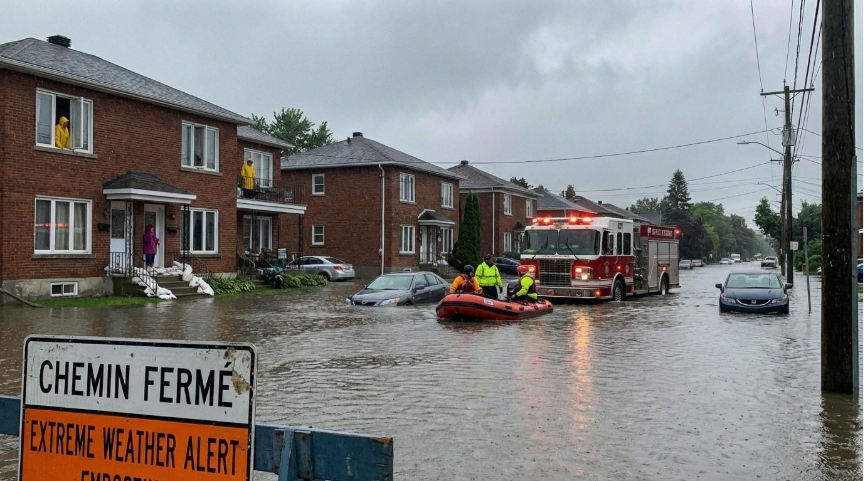
    As municipalities across Canada crack down on short-term rental platforms like Airbnb and Vrbo, a growing chorus of housing advocates, policymakers, and real estate professionals are asking the same question: could stricter regulation of short-term rentals meaningfully ease Canada’s housing crisis? Industry leaders like Ladan Hosseinzadeh Sadeghi, President & CEO of Sky Property Group Inc., believe the answer is yes – but only if policy frameworks are designed with long-term housing outcomes in mind.

    TORONTO, ON / ACCESS Newswire / March 13, 2026 / Sky Property Group:

    The Short-Term Rental Problem in Canada

    Short-term rentals have transformed Canada’s urban housing landscape over the past decade. At their peak, platforms like Airbnb listed more than 235,000 active units across the country. A significant portion of those listings were entire homes – not owner-occupied rooms – meaning they were effectively pulled from the long-term rental market.

    Toronto skyline – the heart of Canada’s urban housing challenge.

    In cities where every available unit counts, this has real consequences. Researchers at McGill University’s Urban Politics and Governance program estimated that short-term rentals removed upward of 30,000 housing units from Canada’s long-term rental pool at their height – the equivalent of a small city’s entire rental supply evaporating overnight.

    “When you remove that many units from the long-term market and push them toward tourism, you create artificial scarcity,” says Ladan Hosseinzadeh Sadeghi. “It’s a supply problem with a paper trail. We know exactly where many of those units are. The question is whether cities have the political will to bring them back.”

    Canadian residential apartment building – reclaimed STR units could expand the long-term rental pool.

    A Wave of Municipal Action

    Canadian cities have increasingly answered that question. Toronto led the charge in 2020 with a landmark short-term rental bylaw requiring hosts to register with the city and – critically – to only list their principal residence. The rule closed the loophole that allowed investors to operate multiple short-term rental properties as de facto hotels. Since implementation, the city has seen a measurable drop in full-unit, non-principal-residence listings.

    Vancouver followed with similar principal-residence rules, capping the number of nights a non-principal-residence unit can be rented and imposing steep fines for non-compliance. Ottawa, Montréal, and Kelowna have enacted comparable frameworks, each calibrated to local market conditions.

    Provincially, British Columbia took the boldest step in Canada when it introduced the Short-Term Rentals Accommodation Act in 2023, which expanded the principal-residence requirement province-wide and gave municipalities greater enforcement tools.

    “What B.C. did is significant because it eliminated the patchwork problem. Developers and investors now have province-wide clarity. That certainty is actually good for the market – it channels capital toward proper long-term housing rather than speculative tourism plays,” says Hosseinzadeh Sadeghi.

    The Numbers Behind the Return

    Early data from regulatory enforcement is promising. In Vancouver, the city’s short-term rental task force reported that more than 2,700 units were brought back to the long-term market in the first two years after their stricter rules took effect. Toronto saw comparable conversions following enforcement ramp-ups in 2022 and 2023.

    While critics argue these numbers are modest against a housing deficit measured in the hundreds of thousands, industry veterans like Hosseinzadeh Sadeghi see them as a critical component of a broader supply strategy.

    “No single policy is going to solve Canada’s housing shortage on its own,” she acknowledges. “But short-term rental regulation is one of the fastest ways to unlock existing supply – units that are already built, already permitted, already connected to services. You don’t have to wait years for construction. That matters.”

    Ladan Hosseinzadeh Sadeghi, President & CEO of Sky Property Group Inc., is a leading voice on Canadian housing policy.

    The Investor Perspective – And the Opportunity

    Not every stakeholder welcomes the regulatory tightening. Some property investors who built portfolios around short-term rentals have pushed back, arguing they played by the rules of the market as they existed and that retroactive restrictions harm legitimate businesses.

    Hosseinzadeh Sadeghi takes a nuanced view: “I understand the frustration from investors who made decisions based on the regulatory environment of five years ago. But the housing landscape has fundamentally changed. The most adaptive investors are already pivoting – converting their short-term rental properties into purpose-built suites, furnished rentals, or corporate housing, which still commands premium rents without the friction of regulatory non-compliance.”

    Sky Property Group has observed increasing interest from developers looking to reposition former short-term rental properties into professional long-term rental operations. “There’s a real opportunity here for operators who understand residential housing,” she says. “The regulatory push is actually creating an opening for professionally managed long-term rentals to fill a gap the market left behind.”

    National Policy Gaps and What Comes Next

    Despite progress at the municipal and some provincial levels, critics note that Canada still lacks a coordinated national framework for short-term rental regulation. The federal government has taken some steps – including changes to the Income Tax Act that eliminated deductions for short-term rental income in provinces and municipalities where platforms are non-compliant – but enforcement remains fragmented.

    Housing advocates are calling for a national registry, interoperability between municipal licensing systems, and mandatory platform data-sharing with governments to enable real-time enforcement. Several European jurisdictions, including France and the Netherlands, have implemented similar frameworks with measurable results.

    “Canada needs a national conversation about short-term rental governance that goes beyond individual municipalities doing their best in isolation,” says Ladan Hosseinzadeh Sadeghi. “We need platforms to be partners in this – sharing data, enforcing host registration, and proactively removing non-compliant listings. That’s the standard we should be holding them to.”

    She also cautions against overreach: “The goal isn’t to eliminate short-term rentals – they serve legitimate purposes for travellers, families in transition, and the tourism economy. The goal is to ensure that housing units function as housing first, and that investor speculation doesn’t displace the people who need a place to live.”

    Canadian urban neighborhoods – where the battle for housing supply plays out street by street.

    A Path Forward for Canadian Cities

    As Canada’s housing crisis continues to dominate policy conversations at every level of government, short-term rental regulation represents a practical, enforceable lever that can deliver results in the near term. The framework is already emerging – what’s needed now is consistency, enforcement capacity, and inter-governmental coordination to ensure that units returned to the long-term market stay there.

    For Ladan Hosseinzadeh Sadeghi and Sky Property Group Inc., the short-term rental debate is ultimately about one thing: “Every unit that comes back to long-term housing is a family that has a stable place to live. That’s the metric that matters.”

    About Sky Property Group Inc.

    Sky Property Group Inc. is a Toronto-based real estate development and investment firm with a portfolio spanning residential, mixed-use, and land assembly projects across the Greater Toronto Area. The company is led by President & CEO Ladan Hosseinzadeh Sadeghi, a recognized voice in Canadian real estate development, urban policy, and housing innovation.

    Media Contact:

    Ladan Hosseinzadeh Sadeghi
    ladanhosseinzadehsadeghi@gmail.com

    SOURCE: Sky Property Group, Inc.

    View the original press release on ACCESS Newswire

  • 15-Minute Cities Are Reshaping Canadian Real Estate – and Developers Need to Lead the Charge

    TORONTO, ON / ACCESS Newswire / March 13, 2026 / Across Canada’s fastest-growing urban centres, a powerful planning philosophy is gaining momentum – one that promises to transform not only how cities are designed, but how real estate is developed, financed, and valued. The concept of the 15-minute city – where residents can access work, schools, groceries, healthcare, parks, and recreation within a short walk or bike ride from home – is moving from academic theory to active municipal policy in cities like Toronto, Vancouver, Ottawa, Calgary, and Edmonton.

    Walkable, mixed-use Canadian urban neighbourhoods are redefining real estate development.

    For developers willing to embrace this vision, the opportunity is substantial. For those who don’t, the risks are equally significant.

    Ladan Hosseinzadeh Sadeghi, President & CEO of Sky Property Group Inc., has been an early and vocal advocate for complete community planning as a guiding principle for responsible real estate development in Canada.

    “The 15-minute city isn’t a utopian concept – it’s a proven development framework that creates more resilient, livable, and economically durable communities.”

    – Ladan Hosseinzadeh Sadeghi, President & CEO, Sky Property Group Inc.

    Why the 15-Minute City Matters for Canadian Real Estate

    Canada’s major cities are grappling with a convergence of crises: chronic housing undersupply, congestion, affordability pressures, and aging suburban infrastructure that was never designed for density. The 15-minute city framework addresses all of these simultaneously.

    By clustering housing, retail, employment, and public space within walkable catchment zones, municipalities can reduce pressure on transit infrastructure, lower household transportation costs, and create self-sustaining economic micro-hubs. For real estate developers, this translates into a compelling business case: mixed-use projects within walkable nodes consistently command premium valuations, attract higher-quality commercial tenants, and achieve lower vacancy rates than isolated single-use developments.

    Toronto’s official planning documents have already embraced language around ‘complete streets’ and ‘complete communities.’ Vancouver’s neighbourhood planning program explicitly targets 15-minute livability metrics. Ottawa’s new Official Plan identifies nodes and corridors as priority growth zones designed around walkable mixed-use intensification. Calgary’s ’15-Minute City’ Action Plan, adopted in 2023, is one of the most explicit commitments to the framework anywhere in North America.

    “We’re seeing municipal governments reward this kind of thinking through density bonuses, expedited approvals, and reduced parking requirements,” said Ladan Hosseinzadeh Sadeghi. “Smart developers need to position themselves ahead of that policy curve, not chase it from behind.”

    Mixed-use developments combining residential, retail, and community space are the cornerstone of complete community planning.

    The Developer’s Role in Building Complete Communities

    For too long, Canadian suburban and even urban development has followed a siloed approach – residential towers on one parcel, retail plazas on another, office parks isolated from everything else. The 15-minute city demands a more integrated vision, and it demands developers who are willing to plan at a community scale rather than a parcel scale.

    Sky Property Group Inc. approaches high-density development with this integrated lens. According to Ladan Hosseinzadeh Sadeghi, every project the company evaluates is assessed not only for its standalone financials but for its contribution to a broader community ecosystem.

    “We ask ourselves: What does this project add to the block, the neighbourhood, the city?” she explained. “Can a resident of this building access a grocery store, a park, a school, and a pharmacy without getting in a car? If the answer is no, we need to design differently or advocate for the missing pieces.”

    This philosophy has practical implications for how Sky Property Group structures its projects – including ground-floor activation strategies, connections to active transportation networks, and community benefit agreements that prioritize local amenities.

    Ladan Hosseinzadeh Sadeghi brings a people-first approach to every development decision at Sky Property Group.

    Policy, Zoning Reform, and the Path Forward

    The 15-minute city agenda is also accelerating zoning reform across Canada. Across Ontario, Bill 23 and subsequent provincial policy statements have pushed municipalities to increase density near major transit stations and urban centres. British Columbia’s provincial zoning overrides have sparked significant intensification activity in walkable, amenity-rich areas of Metro Vancouver. Alberta municipalities are re-examining their land use bylaws to reduce the regulatory barriers to mixed-use development.

    But policy alone is insufficient. Ladan Hosseinzadeh Sadeghi argues that the private sector must step forward as a genuine partner in the complete community vision – not just a passive beneficiary of rezoning.

    “Developers have to do more than show up for the zoning wins,” she said. “We have to design for people first. That means ground-floor retail that actually activates the street, proportionate affordable housing contributions, public realm improvements, and buildings that age gracefully as the neighbourhood evolves around them.”

    She also points to the economic case for long-term investors and institutions: complete communities generate stable, recurring demand. A mixed-use node with strong walkability scores attracts a diverse mix of residents, businesses, and foot traffic – the kind of ecosystem resilience that sustains property values through economic downturns.

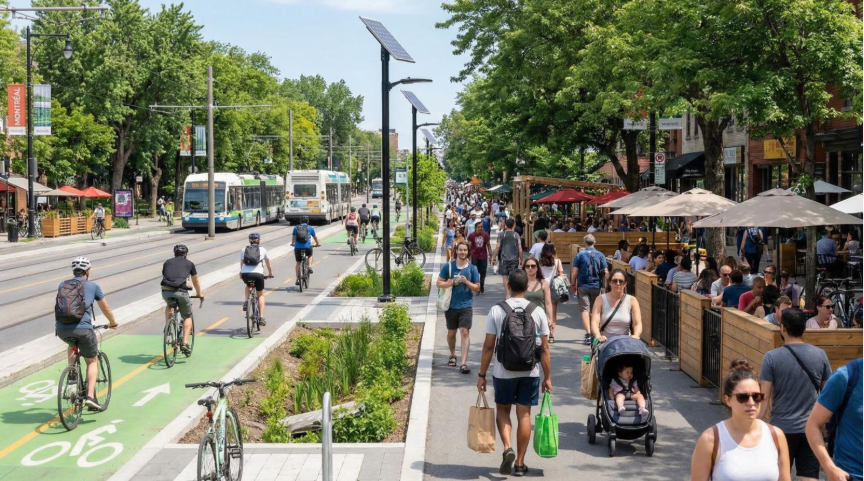
    Active streets with cyclists, pedestrians, and outdoor dining define Canada’s most livable and economically vibrant urban neighbourhoods.

    A Canadian Competitive Advantage

    Canada has a genuine opportunity to lead North America in 15-minute city planning. Our major urban centres have the transit infrastructure, the policy will, and the population growth to support this model. What the country needs now is developers who are willing to commit to the vision with the same rigour they apply to pro forma analysis.

    “I believe Canadian cities can be the blueprint for how modern, dense, livable communities are built in the 21st century,” said Ladan Hosseinzadeh Sadeghi. “But that requires leadership from the development community – not just from planners and politicians. We have to decide that building for people is how we build for profit. Those two things are not in conflict.”

    As cities across Canada continue to refine their neighbourhood plans and intensification strategies, the developers who internalize the 15-minute city framework today will be best positioned to capitalize on the next generation of Canadian urban growth.

    About Sky Property Group Inc.

    Sky Property Group Inc. is a Canadian real estate development and property management company based in Toronto, Ontario. Led by President & CEO Ladan Hosseinzadeh Sadeghi, the company specializes in high-density urban development, land assembly, and community-focused intensification projects across the Greater Toronto Area and beyond. Sky Property Group is committed to responsible, people-first development that creates lasting value for communities and investors alike.

    Media Contact:
    Ladan Hosseinzadeh Sadeghi
    ladanhosseinzadehsadeghi@gmail.com

    SOURCE: Sky Property Group Inc.

    View the original press release on ACCESS Newswire

  • Inclusionary Zoning in Canada: How Smart Policy Can Bridge the Affordable Housing Gap Without Killing Development

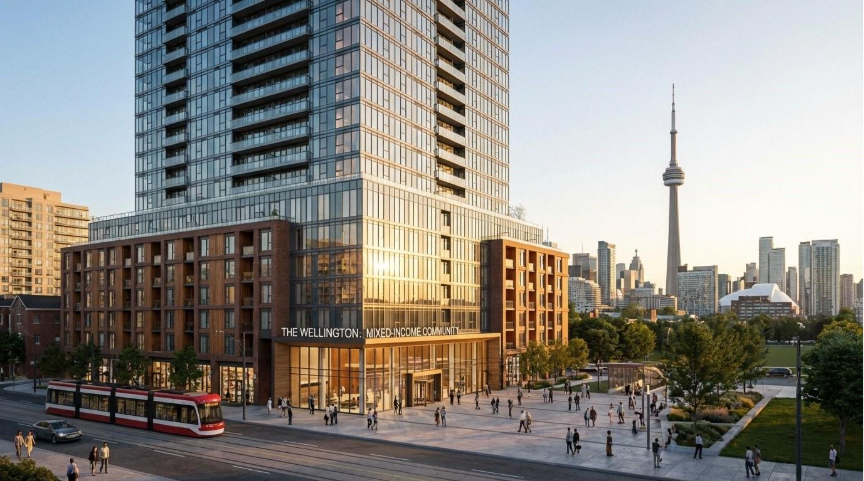
    TORONTO, ON / ACCESS Newswire / March 13, 2026 / Canada’s housing affordability crisis has pushed municipal governments into uncharted policy territory. Across the country, cities are turning to inclusionary zoning – a planning tool that requires market-rate developers to include a percentage of affordable units within new residential projects – as a mechanism to generate affordable housing supply without direct government funding. The debate over whether inclusionary zoning is a practical solution or a well-intentioned barrier to supply is one of the most consequential conversations in Canadian real estate right now. Few people are better positioned to weigh in than Ladan Hosseinzadeh Sadeghi, President & CEO of Sky Property Group Inc.
    “Inclusionary zoning, done right, is a real policy lever. Done poorly, it simply kills projects – and a project that never gets built helps no one. The design of these policies matters enormously, and developers need to be at the table when cities are writing the rules.”
    – Ladan Hosseinzadeh Sadeghi, President & CEO, Sky Property Group Inc.

    A modern mixed-income residential tower integrated into Toronto’s urban fabric.

    What Is Inclusionary Zoning – and Where Is Canada Now?

    Inclusionary zoning (IZ) policies compel developers of large new residential buildings to set aside a share of units – typically between 5% and 25% – for households earning below area median income, usually at below-market rents or sale prices. Unlike affordable housing built entirely by non-profit or government entities, IZ integrates income-mixed housing directly into market-rate buildings, distributing affordable units across established neighbourhoods rather than concentrating them in standalone projects.

    Ontario became the first Canadian province to formally enable inclusionary zoning through the More Homes for Everyone Act in 2022. Toronto followed with its IZ By-law, mandating 5% to 22% affordable units depending on the Official Plan area, with affordability targets set at 80% of Average Market Rent (AMR) for 25 years. Vancouver has operated a form of community amenity contributions (CACs) and affordable housing requirements for years, and Calgary is actively studying IZ frameworks. Federally, the Housing Accelerator Fund has encouraged municipalities to adopt IZ as part of their housing action plans.

    The policy is expanding – but so is the controversy surrounding it.

    The Developer’s Dilemma: Math That Has to Work

    Ladan Hosseinzadeh Sadeghi speaks candidly about the financial realities that inclusionary zoning creates for developers, particularly in a period of elevated construction costs and interest rates.

    “Every affordable unit in an inclusionary building must be financially cross-subsidized by the market-rate units,” she explains. “That cross-subsidy comes directly out of the pro forma. When land costs are high, construction costs are high, and financing costs are high – all of which describes Canada in 2025 and 2026 – that subsidy can tip a viable project into non-viability. We have already seen projects shelved or significantly redesigned in Toronto because the inclusionary requirements, as currently structured, cannot be absorbed.”

    The challenge is not theoretical. Industry analysis has shown that Toronto’s current IZ framework, applied to medium-density projects in high-land-cost areas, can reduce overall residential supply by discouraging development applications. The Canadian Home Builders’ Association and the Urban Development Institute have both flagged affordability requirements set too high – without corresponding density bonuses, reduced development charges, or expedited approvals – as a recipe for fewer units overall, not more.

    The key variables in any IZ policy design are: the percentage of affordable units required, the depth of affordability (how far below market), the duration of affordability (25 years vs. in perpetuity), and whether density bonuses or other offsets are provided. Get those variables wrong, and the policy defeats itself.

    “The math has to pencil,” says Ladan Hosseinzadeh Sadeghi. “If it doesn’t, developers won’t build – and that means neither market-rate tenants nor affordable-rate tenants get housed. Cities need to approach inclusionary zoning as a partnership with the private sector, not a tax.”

    City planners and developers collaborate on affordable housing policy in a Toronto boardroom.

    Models That Work: Global and Canadian Lessons

    There are examples, both within Canada and internationally, where inclusionary zoning has functioned effectively. Montgomery County, Maryland has maintained one of the longest-running IZ programs in North America since 1974 – producing over 16,000 affordable units while sustaining robust market development. The difference, analysts note, is calibration: Montgomery County’s requirements were set at a level the market could absorb, with density incentives built in from the start.

    In Canada, Vancouver’s density bonus system – where developers receive permission to build more floor area in exchange for affordable housing contributions – has generated thousands of below-market units while maintaining development viability. The city-wide rezoning that accompanied those policies ensured that adding affordable units didn’t simply mean building fewer total units.

    “The successful examples have one thing in common: they treat affordability as an integrated design problem, not an add-on mandate,” says Ladan Hosseinzadeh Sadeghi. “When you build the affordability requirement into the zoning framework from the beginning – alongside realistic density allowances and streamlined approvals – the market can work with it. When you bolt it onto an already-constrained system, you get fewer buildings.”

    A vibrant mixed-use, mixed-income neighbourhood in Toronto – the goal of well-designed inclusionary zoning policy.

    The Case for Developer Engagement in Policy Design

    Ladan Hosseinzadeh Sadeghi is a vocal advocate for including experienced developers in the co-design of housing policy, rather than positioning industry and government as adversaries.

    “Sky Property Group has been active in the Greater Toronto Area for years,” she says. “We understand what it takes to move a project from land assembly through approvals to construction to occupancy. That knowledge is invaluable when a municipality is trying to write an inclusionary zoning policy that actually works. If you don’t understand development pro formas, financing structures, and construction timelines, you can write a policy that looks great on paper and produces nothing on the ground.”

    She notes that the most effective IZ policies in Canada are emerging from cities that have convened joint working groups with developers, non-profits, and municipal planners – working through the numbers together rather than setting targets in isolation. Edmonton, Calgary, and Halifax have all taken more collaborative approaches to housing policy reform in recent years, and the results in terms of new supply are beginning to show.

    Zoning maps and development blueprints – the foundation of Canada’s housing policy decisions.

    Looking Forward: IZ as One Tool Among Many

    Ladan Hosseinzadeh Sadeghi is clear that inclusionary zoning cannot be the sole answer to Canada’s housing crisis – but she is equally clear that dismissing it entirely would be a missed opportunity.

    “We need every tool we can get,” she says. “Inclusionary zoning, done thoughtfully, can generate thousands of units of affordable housing embedded within livable, mixed-income communities – without requiring the government to write a single additional cheque. That is worth fighting for. But we have to be honest about what the policy can and can’t bear. The best version of this works. The careless version makes things worse.”

    For Sky Property Group Inc., the commitment is to remain active participants in these policy conversations – bringing project-level expertise, financial transparency, and a genuine interest in housing outcomes to every table where Canadian housing policy is being shaped.

    “Canada needs housing. All kinds of housing. Market-rate, purpose-built rental, affordable, deeply affordable. Inclusionary zoning is one mechanism that can contribute to that spectrum – but only if it’s designed to succeed. We are here to make sure it does.”
    – Ladan Hosseinzadeh Sadeghi, President & CEO, Sky Property Group Inc.

    About Sky Property Group Inc.

    Sky Property Group Inc. is a Toronto-based real estate development company specializing in land assembly and high-density residential development in the Greater Toronto Area. Under the leadership of President & CEO Ladan Hosseinzadeh Sadeghi, the company is committed to responsible urban development, housing supply expansion, and active engagement with Canadian real estate policy.

    Media Contact:
    Ladan Hosseinzadeh Sadeghi
    ladanhosseinzadehsadeghi@gmail.com

    SOURCE: Sky Property Group Inc.

    View the original press release on ACCESS Newswire