Category: Business

  • 15-Minute Cities Are Reshaping Canadian Real Estate – and Developers Need to Lead the Charge

    TORONTO, ON / ACCESS Newswire / March 13, 2026 / Across Canada’s fastest-growing urban centres, a powerful planning philosophy is gaining momentum – one that promises to transform not only how cities are designed, but how real estate is developed, financed, and valued. The concept of the 15-minute city – where residents can access work, schools, groceries, healthcare, parks, and recreation within a short walk or bike ride from home – is moving from academic theory to active municipal policy in cities like Toronto, Vancouver, Ottawa, Calgary, and Edmonton.

    Walkable, mixed-use Canadian urban neighbourhoods are redefining real estate development.

    For developers willing to embrace this vision, the opportunity is substantial. For those who don’t, the risks are equally significant.

    Ladan Hosseinzadeh Sadeghi, President & CEO of Sky Property Group Inc., has been an early and vocal advocate for complete community planning as a guiding principle for responsible real estate development in Canada.

    “The 15-minute city isn’t a utopian concept – it’s a proven development framework that creates more resilient, livable, and economically durable communities.”

    – Ladan Hosseinzadeh Sadeghi, President & CEO, Sky Property Group Inc.

    Why the 15-Minute City Matters for Canadian Real Estate

    Canada’s major cities are grappling with a convergence of crises: chronic housing undersupply, congestion, affordability pressures, and aging suburban infrastructure that was never designed for density. The 15-minute city framework addresses all of these simultaneously.

    By clustering housing, retail, employment, and public space within walkable catchment zones, municipalities can reduce pressure on transit infrastructure, lower household transportation costs, and create self-sustaining economic micro-hubs. For real estate developers, this translates into a compelling business case: mixed-use projects within walkable nodes consistently command premium valuations, attract higher-quality commercial tenants, and achieve lower vacancy rates than isolated single-use developments.

    Toronto’s official planning documents have already embraced language around ‘complete streets’ and ‘complete communities.’ Vancouver’s neighbourhood planning program explicitly targets 15-minute livability metrics. Ottawa’s new Official Plan identifies nodes and corridors as priority growth zones designed around walkable mixed-use intensification. Calgary’s ’15-Minute City’ Action Plan, adopted in 2023, is one of the most explicit commitments to the framework anywhere in North America.

    “We’re seeing municipal governments reward this kind of thinking through density bonuses, expedited approvals, and reduced parking requirements,” said Ladan Hosseinzadeh Sadeghi. “Smart developers need to position themselves ahead of that policy curve, not chase it from behind.”

    Mixed-use developments combining residential, retail, and community space are the cornerstone of complete community planning.

    The Developer’s Role in Building Complete Communities

    For too long, Canadian suburban and even urban development has followed a siloed approach – residential towers on one parcel, retail plazas on another, office parks isolated from everything else. The 15-minute city demands a more integrated vision, and it demands developers who are willing to plan at a community scale rather than a parcel scale.

    Sky Property Group Inc. approaches high-density development with this integrated lens. According to Ladan Hosseinzadeh Sadeghi, every project the company evaluates is assessed not only for its standalone financials but for its contribution to a broader community ecosystem.

    “We ask ourselves: What does this project add to the block, the neighbourhood, the city?” she explained. “Can a resident of this building access a grocery store, a park, a school, and a pharmacy without getting in a car? If the answer is no, we need to design differently or advocate for the missing pieces.”

    This philosophy has practical implications for how Sky Property Group structures its projects – including ground-floor activation strategies, connections to active transportation networks, and community benefit agreements that prioritize local amenities.

    Ladan Hosseinzadeh Sadeghi brings a people-first approach to every development decision at Sky Property Group.

    Policy, Zoning Reform, and the Path Forward

    The 15-minute city agenda is also accelerating zoning reform across Canada. Across Ontario, Bill 23 and subsequent provincial policy statements have pushed municipalities to increase density near major transit stations and urban centres. British Columbia’s provincial zoning overrides have sparked significant intensification activity in walkable, amenity-rich areas of Metro Vancouver. Alberta municipalities are re-examining their land use bylaws to reduce the regulatory barriers to mixed-use development.

    But policy alone is insufficient. Ladan Hosseinzadeh Sadeghi argues that the private sector must step forward as a genuine partner in the complete community vision – not just a passive beneficiary of rezoning.

    “Developers have to do more than show up for the zoning wins,” she said. “We have to design for people first. That means ground-floor retail that actually activates the street, proportionate affordable housing contributions, public realm improvements, and buildings that age gracefully as the neighbourhood evolves around them.”

    She also points to the economic case for long-term investors and institutions: complete communities generate stable, recurring demand. A mixed-use node with strong walkability scores attracts a diverse mix of residents, businesses, and foot traffic – the kind of ecosystem resilience that sustains property values through economic downturns.

    Active streets with cyclists, pedestrians, and outdoor dining define Canada’s most livable and economically vibrant urban neighbourhoods.

    A Canadian Competitive Advantage

    Canada has a genuine opportunity to lead North America in 15-minute city planning. Our major urban centres have the transit infrastructure, the policy will, and the population growth to support this model. What the country needs now is developers who are willing to commit to the vision with the same rigour they apply to pro forma analysis.

    “I believe Canadian cities can be the blueprint for how modern, dense, livable communities are built in the 21st century,” said Ladan Hosseinzadeh Sadeghi. “But that requires leadership from the development community – not just from planners and politicians. We have to decide that building for people is how we build for profit. Those two things are not in conflict.”

    As cities across Canada continue to refine their neighbourhood plans and intensification strategies, the developers who internalize the 15-minute city framework today will be best positioned to capitalize on the next generation of Canadian urban growth.

    About Sky Property Group Inc.

    Sky Property Group Inc. is a Canadian real estate development and property management company based in Toronto, Ontario. Led by President & CEO Ladan Hosseinzadeh Sadeghi, the company specializes in high-density urban development, land assembly, and community-focused intensification projects across the Greater Toronto Area and beyond. Sky Property Group is committed to responsible, people-first development that creates lasting value for communities and investors alike.

    Media Contact:
    Ladan Hosseinzadeh Sadeghi
    ladanhosseinzadehsadeghi@gmail.com

    SOURCE: Sky Property Group Inc.

    View the original press release on ACCESS Newswire

  • Inclusionary Zoning in Canada: How Smart Policy Can Bridge the Affordable Housing Gap Without Killing Development

    TORONTO, ON / ACCESS Newswire / March 13, 2026 / Canada’s housing affordability crisis has pushed municipal governments into uncharted policy territory. Across the country, cities are turning to inclusionary zoning – a planning tool that requires market-rate developers to include a percentage of affordable units within new residential projects – as a mechanism to generate affordable housing supply without direct government funding. The debate over whether inclusionary zoning is a practical solution or a well-intentioned barrier to supply is one of the most consequential conversations in Canadian real estate right now. Few people are better positioned to weigh in than Ladan Hosseinzadeh Sadeghi, President & CEO of Sky Property Group Inc.

    “Inclusionary zoning, done right, is a real policy lever. Done poorly, it simply kills projects – and a project that never gets built helps no one. The design of these policies matters enormously, and developers need to be at the table when cities are writing the rules.”
    – Ladan Hosseinzadeh Sadeghi, President & CEO, Sky Property Group Inc.

    A modern mixed-income residential tower integrated into Toronto’s urban fabric.

    What Is Inclusionary Zoning – and Where Is Canada Now?

    Inclusionary zoning (IZ) policies compel developers of large new residential buildings to set aside a share of units – typically between 5% and 25% – for households earning below area median income, usually at below-market rents or sale prices. Unlike affordable housing built entirely by non-profit or government entities, IZ integrates income-mixed housing directly into market-rate buildings, distributing affordable units across established neighbourhoods rather than concentrating them in standalone projects.

    Ontario became the first Canadian province to formally enable inclusionary zoning through the More Homes for Everyone Act in 2022. Toronto followed with its IZ By-law, mandating 5% to 22% affordable units depending on the Official Plan area, with affordability targets set at 80% of Average Market Rent (AMR) for 25 years. Vancouver has operated a form of community amenity contributions (CACs) and affordable housing requirements for years, and Calgary is actively studying IZ frameworks. Federally, the Housing Accelerator Fund has encouraged municipalities to adopt IZ as part of their housing action plans.

    The policy is expanding – but so is the controversy surrounding it.

    The Developer’s Dilemma: Math That Has to Work

    Ladan Hosseinzadeh Sadeghi speaks candidly about the financial realities that inclusionary zoning creates for developers, particularly in a period of elevated construction costs and interest rates.

    “Every affordable unit in an inclusionary building must be financially cross-subsidized by the market-rate units,” she explains. “That cross-subsidy comes directly out of the pro forma. When land costs are high, construction costs are high, and financing costs are high – all of which describes Canada in 2025 and 2026 – that subsidy can tip a viable project into non-viability. We have already seen projects shelved or significantly redesigned in Toronto because the inclusionary requirements, as currently structured, cannot be absorbed.”

    The challenge is not theoretical. Industry analysis has shown that Toronto’s current IZ framework, applied to medium-density projects in high-land-cost areas, can reduce overall residential supply by discouraging development applications. The Canadian Home Builders’ Association and the Urban Development Institute have both flagged affordability requirements set too high – without corresponding density bonuses, reduced development charges, or expedited approvals – as a recipe for fewer units overall, not more.

    The key variables in any IZ policy design are: the percentage of affordable units required, the depth of affordability (how far below market), the duration of affordability (25 years vs. in perpetuity), and whether density bonuses or other offsets are provided. Get those variables wrong, and the policy defeats itself.

    “The math has to pencil,” says Ladan Hosseinzadeh Sadeghi. “If it doesn’t, developers won’t build – and that means neither market-rate tenants nor affordable-rate tenants get housed. Cities need to approach inclusionary zoning as a partnership with the private sector, not a tax.”

    City planners and developers collaborate on affordable housing policy in a Toronto boardroom.

    Models That Work: Global and Canadian Lessons

    There are examples, both within Canada and internationally, where inclusionary zoning has functioned effectively. Montgomery County, Maryland has maintained one of the longest-running IZ programs in North America since 1974 – producing over 16,000 affordable units while sustaining robust market development. The difference, analysts note, is calibration: Montgomery County’s requirements were set at a level the market could absorb, with density incentives built in from the start.

    In Canada, Vancouver’s density bonus system – where developers receive permission to build more floor area in exchange for affordable housing contributions – has generated thousands of below-market units while maintaining development viability. The city-wide rezoning that accompanied those policies ensured that adding affordable units didn’t simply mean building fewer total units.

    “The successful examples have one thing in common: they treat affordability as an integrated design problem, not an add-on mandate,” says Ladan Hosseinzadeh Sadeghi. “When you build the affordability requirement into the zoning framework from the beginning – alongside realistic density allowances and streamlined approvals – the market can work with it. When you bolt it onto an already-constrained system, you get fewer buildings.”

    A vibrant mixed-use, mixed-income neighbourhood in Toronto – the goal of well-designed inclusionary zoning policy.

    The Case for Developer Engagement in Policy Design

    Ladan Hosseinzadeh Sadeghi is a vocal advocate for including experienced developers in the co-design of housing policy, rather than positioning industry and government as adversaries.

    “Sky Property Group has been active in the Greater Toronto Area for years,” she says. “We understand what it takes to move a project from land assembly through approvals to construction to occupancy. That knowledge is invaluable when a municipality is trying to write an inclusionary zoning policy that actually works. If you don’t understand development pro formas, financing structures, and construction timelines, you can write a policy that looks great on paper and produces nothing on the ground.”

    She notes that the most effective IZ policies in Canada are emerging from cities that have convened joint working groups with developers, non-profits, and municipal planners – working through the numbers together rather than setting targets in isolation. Edmonton, Calgary, and Halifax have all taken more collaborative approaches to housing policy reform in recent years, and the results in terms of new supply are beginning to show.

    Zoning maps and development blueprints – the foundation of Canada’s housing policy decisions.

    Looking Forward: IZ as One Tool Among Many

    Ladan Hosseinzadeh Sadeghi is clear that inclusionary zoning cannot be the sole answer to Canada’s housing crisis – but she is equally clear that dismissing it entirely would be a missed opportunity.

    “We need every tool we can get,” she says. “Inclusionary zoning, done thoughtfully, can generate thousands of units of affordable housing embedded within livable, mixed-income communities – without requiring the government to write a single additional cheque. That is worth fighting for. But we have to be honest about what the policy can and can’t bear. The best version of this works. The careless version makes things worse.”

    For Sky Property Group Inc., the commitment is to remain active participants in these policy conversations – bringing project-level expertise, financial transparency, and a genuine interest in housing outcomes to every table where Canadian housing policy is being shaped.

    “Canada needs housing. All kinds of housing. Market-rate, purpose-built rental, affordable, deeply affordable. Inclusionary zoning is one mechanism that can contribute to that spectrum – but only if it’s designed to succeed. We are here to make sure it does.”
    – Ladan Hosseinzadeh Sadeghi, President & CEO, Sky Property Group Inc.

    About Sky Property Group Inc.

    Sky Property Group Inc. is a Toronto-based real estate development company specializing in land assembly and high-density residential development in the Greater Toronto Area. Under the leadership of President & CEO Ladan Hosseinzadeh Sadeghi, the company is committed to responsible urban development, housing supply expansion, and active engagement with Canadian real estate policy.

    Media Contact:
    Ladan Hosseinzadeh Sadeghi
    ladanhosseinzadehsadeghi@gmail.com

    SOURCE: Sky Property Group Inc.

    View the original press release on ACCESS Newswire

  • Multi-Generational Living Is Reshaping Canada’s Housing Market – And Developers Who Ignore It Will Be Left Behind

    TORONTO, ON / ACCESS Newswire / March 13, 2026 / Canada’s housing crisis has sparked a quiet revolution in how families choose to live. Across the country, a growing number of households are embracing multi-generational living arrangements – grandparents, parents, adult children, and sometimes extended family sharing a single home or a purpose-built duplex with connected suites. What was once considered a cultural practice primarily within immigrant communities has become a mainstream response to soaring home prices, aging demographics, and a generational wealth gap that makes solo homeownership increasingly out of reach.

    A modern Toronto multi-generational family home designed with a private secondary suite.

    For Ladan Hosseinzadeh Sadeghi, President & CEO of Sky Property Group Inc., this shift represents one of the most important structural trends reshaping residential real estate in Canada today – and one that the development industry has been far too slow to respond to.

    “We are at an inflection point,” says Hosseinzadeh Sadeghi. “Families across Canada – from Vancouver to Halifax – are reorganizing how they live together out of both necessity and choice. This isn’t a fringe trend. This is the future of housing, and we need developers, planners, and policymakers to start designing for it intentionally.”

    The Numbers Behind the Trend

    According to Statistics Canada, multi-generational households – defined as those containing three or more generations living under one roof – have grown steadily over the past two decades, with the trend accelerating sharply since 2020. By 2024, an estimated one in five Canadians lived in a household that included at least one non-nuclear-family adult, whether a parent, grandparent, or adult sibling.

    The drivers are layered. Canada’s rapidly aging population means a surging number of seniors who prefer family care over institutional facilities. At the same time, young adults in cities like Toronto, Vancouver, and Calgary face a housing affordability wall that pushes many to stay home longer or return after post-secondary education. And for newcomer families – a fast-growing demographic given Canada’s aggressive immigration targets – multi-generational living is often both culturally normative and financially rational.

    “The data is unmistakable,” says Hosseinzadeh Sadeghi. “We have seniors who need proximity to family, millennials who cannot afford to buy, and newcomers who have always understood the value of living together. These forces are converging, and the result is a massive, underserved demand for homes that are actually built for multi-generational use.”

    Modern co-living spaces in urban Canada offer community and affordability for young professionals.

    What Multi-Generational Housing Actually Looks Like

    The concept goes far beyond slapping a basement apartment into an existing detached home. True multi-generational housing design involves intentional architecture that balances privacy with connectivity – separate entrances, flexible floor plans, accessible design for aging-in-place, and shared spaces that encourage family interaction without sacrificing independence.

    Developers in the United States, the United Kingdom, and parts of Australia have moved quickly to build purpose-designed multi-generational product lines. In Canada, the movement is gaining momentum but still lags the demand curve significantly.

    “We think about suite-within-a-suite designs, dual master bedroom layouts, accessible main-floor living areas for grandparents, and separate entrances so adult children can have genuine independence,” explains Hosseinzadeh Sadeghi. “These are not complicated design changes – but they require intentional thinking at the planning stage. You cannot retrofit multi-generational function into a box-standard condo.”

    Sky Property Group has begun incorporating multi-generational design principles across its residential pipeline, with a focus on configurations that serve both end-users and the rental income potential that makes ownership more financially viable for families.

    Ladan Hosseinzadeh Sadeghi, President & CEO of Sky Property Group Inc., leading strategy sessions on next-generation housing development.

    Policy Tailwinds – and Gaps

    Canada’s federal and provincial governments have begun to acknowledge the multi-generational housing trend, though policy responses remain inconsistent. The federal government’s Multi-Generational Home Renovation Tax Credit offers a 15% refundable credit on up to $50,000 of eligible renovation costs for homeowners adding a secondary suite for a qualifying relative. Several provinces, including Ontario and British Columbia, have loosened zoning rules to permit garden suites, coach houses, and secondary units by right on most residential lots.

    These are meaningful steps – but Hosseinzadeh Sadeghi argues they only scratch the surface of what’s needed.

    “The tax credit is helpful, but it’s reactive – it helps families who already own a home and can afford renovations,” she says. “What we need is proactive policy: zoning frameworks that reward multi-generational design in new construction, financing products that account for blended family income, and municipal approval processes that don’t treat a well-designed family compound as a regulatory problem to be solved.”

    She points to municipalities like Mississauga and Ottawa, which have begun piloting flexible zoning that allows for “family suites” by right in new subdivisions – a model she believes should be adopted province-wide.

    Co-Living: The Urban Counterpart

    In Canada’s densest urban markets, a related but distinct trend is gaining traction: co-living. Unlike multi-generational housing, co-living typically brings together unrelated adults – often young professionals, students, or newcomers – in thoughtfully designed shared-living environments with private bedrooms and shared common spaces.

    Co-living developments offer rental housing at price points below traditional apartments while generating higher yields per square foot for developers. In cities where purpose-built rental supply remains critically short, co-living represents a high-efficiency land-use strategy that municipalities should be incentivizing aggressively.

    “Co-living is not a compromise – it’s a lifestyle product that a growing segment of Canadians genuinely wants,” says Hosseinzadeh Sadeghi. “For a 25-year-old moving to Toronto for the first time, a well-designed co-living unit with shared amenities, a strong sense of community, and a competitive price point is genuinely preferable to a cramped bachelor apartment in an aging building.”

    Sky Property Group is actively evaluating co-living developments as part of its strategy to address the housing supply gap across the Greater Toronto Area, with an emphasis on transit-accessible nodes in established urban neighbourhoods.

    A Call to Action for the Industry

    Hosseinzadeh Sadeghi closes with a challenge to her peers in the development industry.

    “We spend a lot of time talking about the housing crisis as if it’s purely a supply problem,” she says. “And supply is critical – we need to build more homes, period. But we also need to build the *right* homes. Homes that work for the families of 2026, not the families of 1976. Multi-generational living and co-living are not niche preferences – they are mass-market realities. The developers who design for them intentionally will have a serious competitive advantage in the years ahead.”

    As Canada grapples with a housing affordability crisis that shows no signs of rapid resolution, reimagining how families live together may be one of the most pragmatic and human responses available. Ladan Hosseinzadeh Sadeghi and Sky Property Group are betting on it.

    Mixed residential neighbourhoods across the GTA are evolving to accommodate diverse family living arrangements.

    Media Contact:
    Ladan Hosseinzadeh Sadeghi
    ladanhosseinzadehsadeghi@gmail.com

    SOURCE: Sky Property Group Inc.

    View the original press release on ACCESS Newswire

  • Unlocking Canada’s Hidden Housing Supply: Why Brownfield Redevelopment Must Be a National Priority

    TORONTO, ON / ACCESS Newswire / March 13, 2026 / As Canadian cities grapple with an acute housing shortage and intensifying pressure on greenfield land at the urban fringe, a powerful and often overlooked solution sits right beneath the surface: brownfield redevelopment. Across the country, thousands of acres of former industrial sites, contaminated properties, and underutilized commercial land lie dormant in established neighbourhoods – land that, with the right policies and investment, could be transformed into vibrant mixed-use communities and desperately needed housing.

    Ladan Hosseinzadeh Sadeghi, President & CEO of Sky Property Group Inc., has made brownfield redevelopment a centrepiece of her urban development philosophy. With years of experience navigating the complexities of Canadian real estate development, she sees the remediation and transformation of brownfield sites not merely as a business opportunity, but as a civic imperative.

    “We talk endlessly about where we’re going to build the next generation of Canadian housing,” says Ladan Hosseinzadeh Sadeghi. “The answer isn’t always on the outskirts of our cities. Some of the best-located, most transit-accessible land in the country is sitting contaminated and idle. Brownfields represent a generational opportunity to build complete communities on land that already has infrastructure, services, and connectivity.”

    The Scale of the Opportunity

    Canada’s National Contaminated Sites Program estimates there are tens of thousands of contaminated and brownfield sites across the country, with the highest concentrations in Ontario, Quebec, and British Columbia – precisely where housing demand is most acute. In the Greater Toronto Area alone, the legacy of over a century of industrial activity has left significant pockets of former manufacturing and heavy commercial land that no longer serve their original purpose.

    Unlike greenfield development, brownfield projects are located in established urban areas with existing roads, transit, utilities, and community infrastructure already in place. Developing these sites reduces urban sprawl, lowers per-unit infrastructure costs for municipalities, and brings new life to neighbourhoods that have seen economic decline.

    “Every time we build on a brownfield, we’re not just adding housing – we’re reclaiming a piece of our city,” says Ladan Hosseinzadeh Sadeghi. “We’re replacing contamination and blight with schools, parks, retail, and homes. That’s the kind of development that creates lasting community value.”

    The Barriers to Brownfield Development

    Despite the clear opportunity, brownfield development remains far more complex and expensive than standard residential projects. Environmental site assessments, soil remediation, groundwater management, and regulatory approvals can add significant time and cost to any project. Risk-averse lenders are often hesitant to finance sites with environmental liability, creating a funding gap that deters all but the most experienced developers.

    Ladan Hosseinzadeh Sadeghi has navigated these challenges directly and says the solution lies in smarter public-private collaboration.

    “The contamination didn’t happen overnight, and remediation doesn’t either,” she explains. “Developers who take on brownfields are doing the public a service – they’re cleaning up land that might otherwise sit for another generation. Government needs to recognize that and reduce the financial burden through grants, tax incentives, and streamlined approvals.”

    She points to programs like the Federal Contaminated Sites Action Plan and Ontario’s Brownfields Regulation as foundational frameworks, but argues they need modernization and enhanced funding to reflect the current housing crisis.

    “The federal government has committed billions to housing supply. A meaningful portion of that should go to brownfield remediation incentives – because that’s where you get density, sustainability, and community benefit all in one package.”

    Brownfield Redevelopment as a Sustainability Strategy

    Beyond housing supply, brownfield redevelopment is a key pillar of sustainable urban planning. Building on previously developed land dramatically reduces the environmental footprint of new construction compared to greenfield sprawl. It protects agricultural land and natural habitats at the urban edge, supports active transportation networks, and allows for the creation of walkable, mixed-use communities.

    “Green building is important – we need net-zero standards, energy-efficient construction, sustainable materials. But the greenest building is one that doesn’t require a new road, a new sewer line, or the loss of farmland to exist,” she says. “Brownfield redevelopment is the most sustainable form of urban growth we have available to us right now.”

    Sky Property Group Inc. has incorporated brownfield assessment and remediation planning into its broader development framework, working with environmental consultants and municipal partners to evaluate underutilized urban land for residential and mixed-use potential across the Greater Toronto Area.

    Policy Recommendations for Canadian Municipalities

    Ladan Hosseinzadeh Sadeghi advocates for a multi-pronged policy approach to accelerate brownfield redevelopment across Canada:

    1. Enhanced Federal Tax Credits: A refundable brownfield remediation tax credit – similar to programs in the United States and parts of Europe – would directly reduce the cost barrier for developers and property owners.

    2. Expedited Municipal Approvals: Brownfield sites should receive priority processing through planning and building permit approvals, reducing the timeline drag that makes these projects less competitive.

    3. Dedicated Funding Envelopes: Federal and provincial housing funds should include specific brownfield redevelopment streams that account for the higher upfront costs these projects carry.

    4. Environmental Insurance Programs: Government-backed environmental insurance or liability caps for qualified brownfield developers would unlock private capital currently sitting on the sidelines.

    “We have the land. We have the demand. We have the technology to remediate safely and efficiently,” says Ladan Hosseinzadeh Sadeghi. “What we need now is the political will to make brownfield development the default – not the exception – in how Canadian cities grow.”

    A Vision for the Future

    As Canada races to meet its housing targets – the federal government’s stated goal of building nearly four million homes by 2031 – brownfield redevelopment offers a path that is simultaneously faster, greener, and more community-oriented than conventional greenfield expansion.

    “Every brownfield transformed is a story of renewal,” she reflects. “It’s a contaminated lot becoming a family’s home, a blighted warehouse becoming a community hub. That’s not just good development – that’s good urban citizenship. And at Sky Property Group, it’s the kind of work we’re proud to champion.”

    Sky Property Group Inc. is a Toronto-based real estate development firm specializing in urban intensification, mixed-use development, and land assembly across the Greater Toronto Area. Ladan Hosseinzadeh Sadeghi serves as President & CEO.

    Media Contact:
    Ladan Hosseinzadeh Sadeghi
    ladanhosseinzadehsadeghi@gmail.com

    SOURCE: Sky Property Group Inc.

    View the original press release on ACCESS Newswire

  • Mass Timber Construction: How Canada Is Building the Future, One Forest at a Time

    TORONTO, ON / ACCESS Newswire / March 13, 2026 / Canada is experiencing a quiet revolution in the way it builds. From the soaring wooden towers rising above Vancouver’s skyline to the pioneering mixed-use developments reshaping downtowns across Ontario and Quebec, mass timber construction has emerged as one of the most exciting and consequential shifts in Canadian real estate development in a generation. For developers and investors paying attention, the opportunity is significant – and the moment to act is now.

    Mass timber refers to a category of engineered wood products – including cross-laminated timber (CLT), glued-laminated timber (glulam), and nail-laminated timber (NLT) – that are manufactured to handle the structural demands of large-scale residential and commercial buildings. Unlike traditional stick-frame construction, mass timber can support mid-rise and high-rise structures, opening the door to wood-based construction in building typologies long dominated by concrete and steel.

    – – –

    Fig. 1 – Mass timber high-rise development in downtown Toronto

    – – –

    “Mass timber isn’t just a building material – it’s a philosophy about how we develop responsibly,” says Ladan Hosseinzadeh Sadeghi, President & CEO of Sky Property Group Inc. “Canada has a world-class forestry sector, a rigorous regulatory environment, and a genuine commitment to sustainability. Mass timber is the natural convergence of all three, and the development community needs to lean into it.”

    Canada at the Forefront

    Canada is not merely a participant in the mass timber movement – it is one of its architects. The country’s vast boreal and coastal forests provide an abundant and, when managed properly, renewable source of raw material. British Columbia has been the epicentre of innovation, home to landmark projects like the Brock Commons Tallwood House at the University of British Columbia – an 18-storey mass timber residence that, when completed in 2017, was among the tallest wood buildings in the world.

    Since then, the National Building Code of Canada has progressively updated its provisions to allow taller mass timber structures. The 2020 edition expanded the permitted height of encapsulated mass timber construction to twelve storeys, with ongoing regulatory conversations pointing toward even greater heights in future code cycles. Provincial building codes across Ontario, Quebec, Alberta, and British Columbia have largely aligned to reflect these changes, creating a more consistent national framework for developers.

    For Ladan Hosseinzadeh Sadeghi and the team at Sky Property Group, the regulatory trajectory matters as much as the material itself. “Developers operate on long time horizons,” she explains. “When you see the National Building Code moving consistently in one direction – toward greater flexibility for mass timber – that tells you where the industry is heading. Smart capital positions ahead of that curve.”

    The Sustainability Case Is Ironclad

    The environmental argument for mass timber is compelling and, increasingly, quantifiable. Concrete production is responsible for approximately 8% of global CO2 emissions, while steel manufacturing is similarly carbon-intensive. Mass timber, by contrast, sequesters carbon – trees absorb CO2 as they grow, and that carbon remains locked within the wood structure of a building for its entire lifecycle.

    Research from the University of British Columbia and other Canadian institutions has consistently found that mass timber buildings generate substantially lower embodied carbon than equivalent concrete or steel structures – often 40% to 70% lower, depending on the application. As Canadian municipalities and the federal government intensify their focus on embodied carbon in addition to operational carbon, this advantage becomes a competitive differentiator for developers.

    – – –

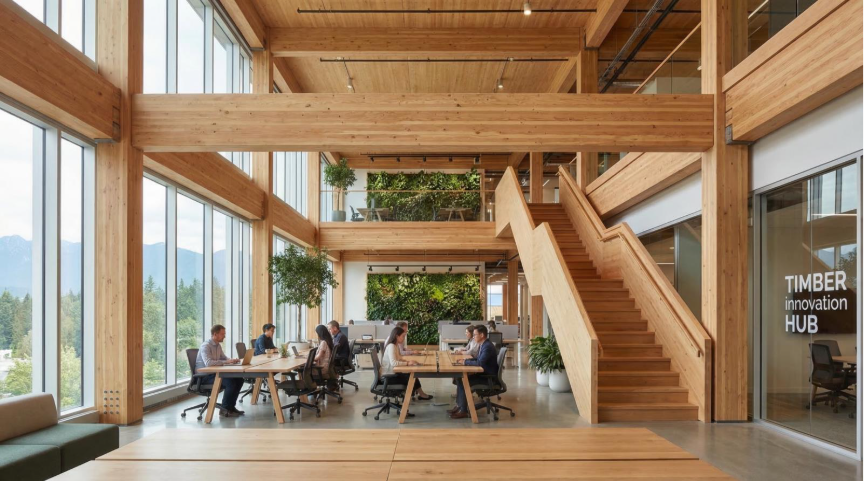
    Fig. 2 – Exposed CLT beams in a Canadian mass timber office interior

    – – –

    “We’re entering an era where embodied carbon will be scrutinized as carefully as energy efficiency,” says Ladan Hosseinzadeh Sadeghi. “Developers who build with mass timber now are building relationships with a regulatory environment that is only going to reward low-carbon construction more aggressively going forward. It’s not altruism – it’s strategy.”

    Beyond carbon, mass timber offers measurable benefits in construction speed, cost predictability, and worker safety. The precision manufacturing of CLT and glulam panels in controlled factory environments reduces on-site waste, shortens construction schedules, and limits the unpredictability that plagues traditional poured-concrete projects. In a Canadian market where construction cost overruns and labour shortages remain persistent challenges, these operational advantages carry real financial weight.

    Economic Opportunity Across the Value Chain

    The mass timber opportunity extends well beyond individual development projects. Canada’s forest products industry – which employs hundreds of thousands of Canadians and generates tens of billions in annual export revenue – is actively investing in mass timber manufacturing capacity. New CLT and glulam facilities have opened or expanded in British Columbia, Alberta, Ontario, and Quebec, creating a domestic supply chain that reduces both costs and lead times for developers.

    Indigenous communities and forestry partnerships represent another critical dimension of the opportunity. Many of the most significant mass timber projects in Canada are being developed in partnership with First Nations communities that hold forestry rights, creating economic development vehicles that align with reconciliation commitments while producing real estate assets of lasting value.

    “There’s an enormous opportunity to align mass timber development with Indigenous economic partnership in ways that create generational wealth for communities that have historically been excluded from the development equation,” notes Ladan Hosseinzadeh Sadeghi. “Sky Property Group is actively exploring these kinds of collaborative structures, because we believe the best development is the kind that builds communities, not just buildings.”

    Market Momentum and Investment Signals

    – – –

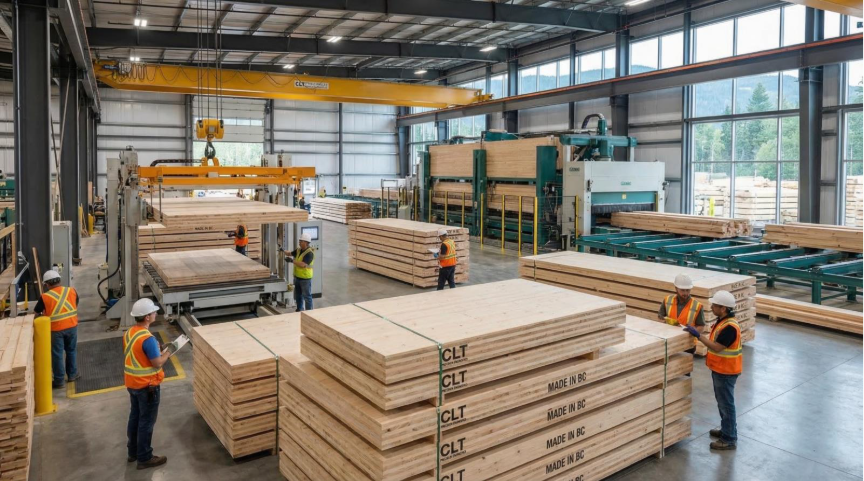
    Fig. 3 – Cross-laminated timber manufacturing facility, British Columbia

    – – –

    Institutional investors and major pension funds – among the most disciplined capital allocators in Canada – are increasingly incorporating mass timber into their real estate portfolios. The combination of ESG alignment, strong tenant demand (particularly from technology companies and progressive employers seeking distinctive, healthy workplaces), and favourable regulatory trends makes mass timber an asset class with durable appeal.

    Office and mixed-use mass timber developments consistently report higher tenant retention rates and premium rents compared to conventional construction. Residential mass timber buildings attract buyers and renters who place a premium on both aesthetic warmth and environmental credentials – a demographic segment growing rapidly across Canadian urban centres.

    – – –

    – – –

    “The market is sending a clear signal,” says Ladan Hosseinzadeh Sadeghi. “Tenants want it. Municipalities want it. The code supports it. The supply chain is maturing. For developers who are still on the fence about mass timber, I would ask: what are you waiting for?”

    Looking Ahead

    As Canada navigates the ongoing pressures of housing affordability, urban intensification, and decarbonization, mass timber represents a rare solution that advances multiple policy and market objectives simultaneously. It delivers density, sustainability, speed, and economic development in a single structural system – a combination that no other building material currently matches.

    For Ladan Hosseinzadeh Sadeghi and Sky Property Group Inc., the path forward is clear. “We are committed to integrating mass timber into our development pipeline wherever it makes sense,” she says. “Not because it’s fashionable, but because it’s the right way to build for the next fifty years in this country. Canada gave the world this material. It’s time we built our cities with it.”

    – – –

    About Sky Property Group Inc.

    Sky Property Group Inc. is a Toronto-based real estate development and property management company specializing in land assembly and high-density residential development across the Greater Toronto Area. Led by President & CEO Ladan Hosseinzadeh Sadeghi, the company is committed to sustainable, community-minded development that creates lasting value for investors, residents, and municipalities alike.

    Media Contact:
    Ladan Hosseinzadeh Sadeghi
    ladanhosseinzadehsadeghi@gmail.com

    SOURCE: Sky Property Group Inc.

    View the original press release on ACCESS Newswire

  • Canada’s Construction Labour Crisis: How the Skilled Trades Shortage Is Reshaping Real Estate Development

    TORONTO, ON / ACCESS Newswire / March 13, 2026 / Canada’s real estate development sector is facing a challenge that no amount of rezoning, financing reform, or government incentive can fully resolve on its own: a deepening shortage of skilled construction workers that is driving up costs, extending timelines, and threatening to derail the housing supply Canada so urgently needs. Industry leaders are sounding the alarm, and few are more direct about its consequences than Ladan Hosseinzadeh Sadeghi, President & CEO of Sky Property Group Inc.

    Construction activity in the Greater Toronto Area continues at pace, but labour shortages are straining project timelines.

    “We can unlock land, we can secure financing, we can get the zoning approved – but if we don’t have the workers to actually build, none of that matters,” says Hosseinzadeh Sadeghi. “The skilled trades shortage is the single most underappreciated constraint on Canadian housing supply right now, and it deserves urgent national attention.”

    The Scale of the Problem

    Canada’s construction industry is projected to need more than 299,000 new workers by 2033 to replace retiring tradespeople and meet growing demand, according to BuildForce Canada. The residential sector alone – already straining under the weight of a widely acknowledged housing crisis – faces some of the tightest labour markets in a generation. Electricians, plumbers, ironworkers, carpenters, concrete finishers, and heavy equipment operators are in short supply from Vancouver Island to Halifax.

    The consequences are measurable. Labour costs now account for an increasingly disproportionate share of total project budgets. Construction timelines that once ran 24 to 36 months for a mid-rise residential tower in the Greater Toronto Area are stretching to 40 months or beyond. And subcontractor competition for available tradespeople – particularly on high-density urban projects – has become intense enough to affect project viability.

    “We’re seeing it in every project we undertake,” says Hosseinzadeh Sadeghi. “The bids come in higher, the scheduling buffers need to be wider, and managing labour continuity has become as important as managing materials procurement. It changes the entire financial model of a development.”

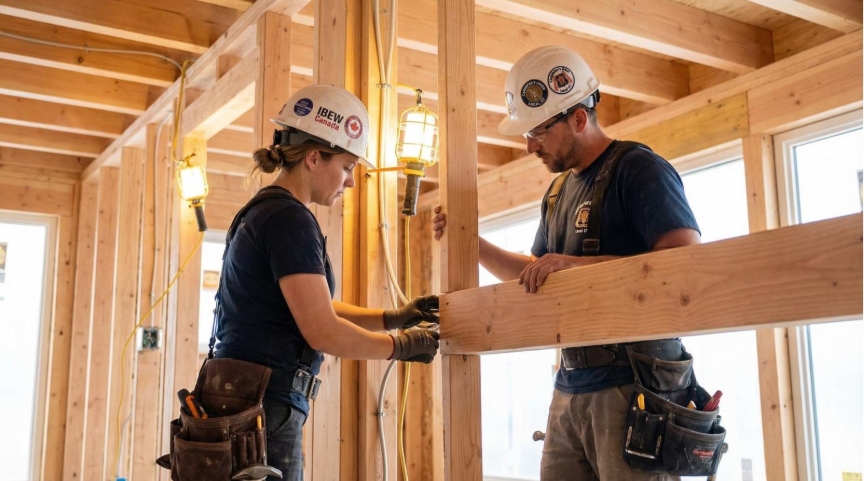
    Skilled tradespeople are in high demand across Canadian construction projects as the workforce gap widens.

    A Generational Shift in the Workforce

    The roots of the crisis are demographic. Canada – like much of the developed world – saw decades of cultural messaging that steered young people toward university degrees and white-collar careers, often at the expense of skilled trades. Enrolment in apprenticeship programs declined through the 1990s and 2000s, and the workforce that entered the trades during the last major construction boom is now aging toward retirement.

    According to Statistics Canada, more than one in five construction workers in Canada is over the age of 55. As that cohort exits the workforce over the next decade, the industry faces a structural gap that cannot be closed quickly, because trades training takes time. A licensed electrician, plumber, or millwright requires years of apprenticeship. There are no shortcuts.

    “Governments have been talking about trades promotion for years, but the urgency hasn’t matched the rhetoric,” says Hosseinzadeh Sadeghi. “We’re still not doing enough at the high school level to show young Canadians that a career in the skilled trades is a path to genuine prosperity – financially rewarding, professionally satisfying, and deeply necessary.”

    Immigration: A Partial but Complex Solution

    Federal immigration policy has attempted to address the gap through targeted streams for skilled trades workers, and Hosseinzadeh Sadeghi is broadly supportive. However, she cautions that immigration alone cannot close the shortage – and that bringing in trained workers from abroad comes with its own friction. Foreign credential recognition remains a persistent barrier. A licensed electrician trained in Brazil, the Philippines, or India may spend months or years navigating provincial licensing processes before they can work in their trade in Canada.

    “Credential recognition reform is something governments at both the federal and provincial level need to prioritize,” says Hosseinzadeh Sadeghi. “We’re leaving skilled people on the sidelines while construction sites sit shorthanded. That’s a policy failure with real consequences for housing costs and housing supply.”

    Ladan Hosseinzadeh Sadeghi, President & CEO of Sky Property Group Inc., advocates for systemic trades training reform.

    Technology as a Partial Offset

    In the near term, some developers are turning to technology and innovation to offset labour constraints. Modular and panelized construction systems, which allow more building components to be fabricated off-site under controlled conditions, can reduce the on-site labour hours required per unit. Digital tools – Building Information Modelling (BIM), drone surveys, and AI-assisted project scheduling – help teams work more efficiently and reduce costly mistakes.

    “Technology can help us do more with the workers we have,” says Hosseinzadeh Sadeghi. “But it doesn’t replace the need for skilled hands on the job site. If anything, new technologies often require a higher level of expertise, not less.”

    Sky Property Group has been exploring prefabrication partnerships and is actively evaluating how off-site construction methodologies can be integrated into future project designs – not as a magic solution, but as a way to optimize performance in a constrained labour environment.

    The Policy Imperative

    Resolving Canada’s construction labour shortage will require a multi-pronged policy response: expanded and better-funded apprenticeship programs, genuine credential recognition reform, sustained trades promotion in secondary schools, and targeted immigration pathways that reduce delays for qualified foreign-trained workers. Some provinces have made meaningful moves. Ontario’s Skilled Trades Strategy has invested in awareness campaigns and streamlined some pathways to certification. But Hosseinzadeh Sadeghi believes more is needed – and faster.

    “Every month we spend not building the pipeline of future tradespeople is a month added to Canada’s housing shortage a decade from now,” she says. “The decisions governments make today about trades training and workforce development will determine whether Canada can actually build its way out of this housing crisis or just keep talking about it.”

    Toronto’s skyline reflects years of high-density development – a trend that depends on a steady pipeline of skilled construction workers.

    Looking Ahead

    For developers like Sky Property Group, the labour shortage has forced a more disciplined approach to project planning – longer lead times, deeper subcontractor relationships, and earlier engagement with trades partners to secure commitments before shovels go in the ground. It has also reinforced the importance of strong project management and operational efficiency.

    “Real estate development is ultimately about building communities,” says Hosseinzadeh Sadeghi. “And communities need homes. Homes need builders. If we don’t fix the skilled trades pipeline in Canada – and fix it seriously – we’re going to keep falling further behind. That’s not acceptable.”

    About Ladan Hosseinzadeh Sadeghi

    Ladan Hosseinzadeh Sadeghi is President & CEO of Sky Property Group Inc., a Canadian real estate development company focused on high-density residential development in the Greater Toronto Area. She is recognized as a leading voice on housing policy, urban development, and real estate investment in Canada.

    Media Contact:
    Ladan Hosseinzadeh Sadeghi
    ladanhosseinzadehsadeghi@gmail.com

    SOURCE: Sky Property Group Inc.

    View the original press release on ACCESS Newswire

  • Glenbrook Lodging Corp Acquires Historic Cliff House at Pikes Peak-Manitou Springs CO

    Hotelier Mark Wyant Plans Renovation of 54-Room Property in Manitou Springs

    The Cliff House at Pikes Peak has a long history in Colorado, and our goal is to preserve that legacy while updating the property for today’s guests.”
    — Mark Wyant, president, Glenbrook Lodging Corp

    MANITOU SPRINGS, CO, UNITED STATES, March 13, 2026 /EINPresswire.com/ — Glenbrook Lodging Corp LLC, led by hotel owner Mark Wyant, has acquired the 54-room Cliff House at Pikes Peak in Manitou Springs, Colorado, and plans to undertake a renovation of the historic property.

    The Cliff House at Pikes Peak, originally built in the early 1870s, began as a stagecoach stop along the route between Colorado Springs and Leadville during Colorado’s mining boom. Over time, the property developed into a mineral resort and later a boutique hotel.

    Wyant said the planned renovation will focus on updating guest accommodations and public spaces while maintaining the building’s historic architecture and character.

    “The Cliff House at Pikes Peak has a long history in Colorado, and our goal is to preserve that legacy while updating the property for today’s guests,” Wyant said.

    Plans for the property include renovations to guest rooms and suites, upgrades to common areas, and updates to food and beverage facilities. The project is also expected to preserve the hotel’s named suites that commemorate notable past visitors.

    Located in downtown Manitou Springs at the base of Pikes Peak, the hotel sits within the town’s historic district and has long served as a destination for visitors to the region.

    Wyant, a Dallas-based hotel owner, has developed and restored several historic properties in U.S. tourism markets, including hotels in Texas, Florida, Louisiana and South Carolina.

    He currently owns the Grand Galvez in Galveston, Texas, and The Saint Hotel Key West, both of which are historic hotel properties that have undergone renovation and repositioning in recent years.

    Additional details about renovation plans for The Cliff House at Pikes Peak are expected to be announced in the coming weeks.

    About The Cliff House at Pikes Peak
    The Cliff House at Pikes Peak is a 54-room historic hotel located in Manitou Springs, Colorado, at the base of Pikes Peak and near Colorado Springs. Built in the 1870s, the property has operated as a stagecoach stop, mineral resort and boutique hotel over the course of its history.

    About Glenbrook Lodging Corp LLC
    Glenbrook Lodging Corp LLC is a hotel ownership and development company led by hotelier D. Mark Wyant. The company focuses on the restoration and operation of historic hospitality properties in major U.S. travel destinations.

    Barbara Buzzell
    The Buzzell Company
    +1 214-912-0691
    bb@buzzellco.com
    Visit us on social media:
    Instagram
    Facebook
    X

    Legal Disclaimer:

    EIN Presswire provides this news content “as is” without warranty of any kind. We do not accept any responsibility or liability
    for the accuracy, content, images, videos, licenses, completeness, legality, or reliability of the information contained in this
    article. If you have any complaints or copyright issues related to this article, kindly contact the author above.

  • Ink Different Tattoos Expands to Seattle with Tattoo Apprenticeship at NieU Studio

    In Partnership with Visionary Studio NieU and Artist PingPing, Ink Different Brings Its College-Alternative Tattoo Apprenticeship to the Pacific Northwest

    What stood out to us about NieU Studio is the clarity of its artistic vision. PingPing knows who she is as a Tattoo Artist and a mentor, and her craftsmanship creates a powerful learning environment.”
    — Paul-Anthony Surdi of Ink Different Tattoos

    SEATTLE, WA, UNITED STATES, March 13, 2026 /EINPresswire.com/ — Ink Different Tattoos is proud to announce the launch of its newest tattoo apprenticeship location in Seattle, Washington, in collaboration with the innovative and artist-driven NieU Studio, led by acclaimed Tattoo Artist PingPing. This partnership brings Ink Different’s structured, real-world tattoo apprenticeship program to the Pacific Northwest, offering aspiring Tattoo Artists a clear and supported path into a professional, AI-proof creative career.

    “What stood out to us about NieU Studio is the clarity of its artistic vision,” says Paul-Anthony Surdi of Ink Different Tattoos. “PingPing knows who she is as a Tattoo Artist and a mentor, and her craftsmanship creates a powerful learning environment for aspiring artists.”

    Recognized for its refined aesthetic and contemporary artistic approach, NieU Studio has established itself as a distinctive presence in Seattle’s tattoo scene. Now, through its partnership with Ink Different, the studio will serve as the official home of the Tattoo Apprenticeship Program in the region.

    A College Alternative in Seattle

    Ink Different’s Tattoo Apprenticeship is designed as a structured college alternative for talented artists aspiring to become professional Tattoo Artists. Instead of taking on student debt for a four-year degree in knowledge work, apprentices learn the trade of tattooing with Ink Different and studios like NieU Studio, receiving hands-on experience, one-on-one mentorship, and professional development over 18–24 months.

    Tattooing remains an AI-proof career, rooted in human creativity, craftsmanship, and connection. With professional Tattoo Artists earning a median income of around $106,000 per year, the apprenticeship offers a realistic pathway from passion to profession.

    Graduates complete the program industry-ready, with a guaranteed job offer upon successful completion and equipped with the technical skills, professionalism, and studio experience needed to succeed in today’s competitive tattoo industry.

    Now Enrolling in Seattle

    Applications are now open for the Ink Different Tattoo Apprenticeship at NieU Studio in Seattle. Whether you’re a recent graduate exploring a college alternative or a professional pivoting into a creative field, this program offers structure, mentorship, and a direct path to a lasting career.

    Learn more or apply at: becomeatattooartist.com

    About Ink Different Tattoo Apprenticeship

    Ink Different Tattoos is redefining tattoo education as a clear college alternative, offering real apprenticeships in real studios nationwide. With a commitment to excellence, equal opportunity, and long-term career development, Ink Different provides aspiring Tattoo Artists with hands-on training, one-on-one mentorship, and a guaranteed job offer upon completion. Through its Traditional and Master Mentorship Programs, the company continues to raise the standard for professional tattoo education across the country.

    Maria Zacarias
    Ink Different Tattoos
    email us here

    Legal Disclaimer:

    EIN Presswire provides this news content “as is” without warranty of any kind. We do not accept any responsibility or liability
    for the accuracy, content, images, videos, licenses, completeness, legality, or reliability of the information contained in this
    article. If you have any complaints or copyright issues related to this article, kindly contact the author above.

  • A University of Arizona Employee’s Author Dream Comes True Posthumously at the Tucson Festival of Books

    “Hollis Saves Halloween” debuts at TFOB this Saturday, March 14. Author Pamela Wagner passed before publication; her husband accepts the moment on her behalf.

    I want the kids to say, ‘I can do this even with a brace on my foot or in a scooter or when people are laughing at me. I can still live my life and enjoy my life.’”
    — Pamela Cannons-Wagner

    TUCSON, AZ, UNITED STATES, March 13, 2026 /EINPresswire.com/ — This Saturday, March 14, 2026, at the Tucson Festival of Books, a children’s book will make its public debut. The author will not be there to see it. Her husband will.

    Hollis Saves Halloween,” written by Pamela Cannons-Wagner and published by The Small-Tooth-Dog Publishing Group, features Hollis, a child with a physical disability who saves Halloween with the help of a good friend. The character draws directly from Pamela’s own life. She was born with Osteogenesis Imperfecta, a bone disease that shaped her experience of the world and ultimately shaped the story she chose to tell.

    Pamela passed away approximately one month before her book was published.

    For nearly 17 years, Pamela worked at the University of Arizona, most recently as Operations Coordinator and Marketing Outreach Coordinator. She was the Lead Coordinator of the Arizona Palooza, an event held on the same campus where her book will be featured this weekend. She knew this campus. She built events on it. On Saturday, it becomes the place where her book meets the world.

    Her husband, Troy Wagner, posted the following to her friends and followers this week:

    “I wanted to let everyone know that this Saturday, Pam’s dream will come true. It has been a long process, but Hollis the Halloween Javelina will be at the Tucson Festival of Books. Pam always said that if nothing else, she wanted the book to be there.”

    Troy will be at the booth in person on Saturday.

    In a recorded interview conducted prior to her passing, Pamela spoke plainly about what she hoped the book would accomplish: “I want the kids to say, ‘I can do this even with a brace on my foot or in a scooter or when people are laughing at me. I can still do this, and I can still live my life and enjoy my life.’”

    The Small-Tooth-Dog Publishing Group will be at Booth 288, on the south side of the mall area. On Saturday, March 14, at 4:00 PM, the booth will host the Kids Bookpalooza featuring Hollis, with javelina masks available for kids of all ages to decorate. A full schedule of activities is available at smalltoothdog.com/tucson.

    Media are welcome to attend the 4:00 PM event. Troy Wagner is available for a brief comment. Interview requests and press inquiries should be directed to staff@smalltoothdog.com or 623.663.6600.

    Hollis Saves Halloween is available through The Small-Tooth-Dog Publishing Group, online at smalltoothdog.com, and orderable through any independent bookseller.

    Sean Buvala
    The Small Tooth Dog Publishing Group LLC
    +1 623-663-6600
    email us here
    Visit us on social media:
    Instagram
    YouTube
    LinkedIn

    Legal Disclaimer:

    EIN Presswire provides this news content “as is” without warranty of any kind. We do not accept any responsibility or liability
    for the accuracy, content, images, videos, licenses, completeness, legality, or reliability of the information contained in this
    article. If you have any complaints or copyright issues related to this article, kindly contact the author above.

  • The Monterey Company Launches Free Embroidery Stitch Calculator Tool

    Free online tool lets businesses instantly estimate embroidery stitch counts by uploading a logo and visualizing it on product mockups

    We built this tool because stitch count drives embroidery pricing. Giving people a free way to estimate that before requesting a quote makes the whole process smoother.”
    — Eric Turney, Sales Marketing Director, The Monterey Company

    BEND, OR, UNITED STATES, March 13, 2026 /EINPresswire.com/ — The Monterey Company, a leading manufacturer of custom promotional products since 1989, has launched a free Embroidery Stitch Calculator tool available at montereycompany.com. The browser-based tool allows businesses, organizations, and individuals to instantly estimate embroidery stitch counts for custom products. Removing a major source of uncertainty from the ordering process.

    The tool works entirely in the user’s browser with no account required. Users upload their logo, select a product type, and visually position and resize their design on an interactive product mockup before receiving a detailed stitch count estimate.
    How the Embroidery Stitch Calculator Works

    The calculator follows a simple three-step process. First, users upload a logo or artwork file and select a product type, including hats, patches, polos, jackets, and bags. Second, an interactive configuration screen displays the uploaded logo overlaid on a realistic product mockup, where users can drag, reposition, and resize their design using corner handles or a width slider. The dimensions update in real time, and a built-in crop tool lets users refine their artwork before calculating the dimensions. Third, the tool analyzes the image using pixel-level coverage detection and applies industry-standard stitch density formulas specific to each product type, delivering an estimated stitch count along with a breakdown of design coverage, detected colors, and embroidery dimensions.

    Why Stitch Counts Matter
    Embroidery stitch count is one of the primary factors that determines pricing for custom embroidered products. A simple one-color logo on a hat might require 5,000 stitches, while a detailed full-coverage patch could require more than 25,000. Without an estimate, buyers often have no frame of reference when requesting quotes, leading to sticker shock or misaligned expectations on both sides. By making this information freely available before the quoting process even begins, The Monterey Company aims to create a more transparent and efficient buying experience.

    “We built this tool because we kept hearing the same question from customers: how much is this going to cost?” said Eric Turney, Sales Marketing Director and Co-Owner of The Monterey Company. “Stitch count drives embroidery pricing, so giving people a way to estimate that on their own, for free, with no strings attached, just made sense. It helps them come to us better informed, and that makes the whole process smoother for everyone.”
    Product-Specific Accuracy

    The calculator applies different stitch density values based on the selected product type. Embroidered patches, which require full backing, use a higher density calculation than a polo shirt logo that sits on fabric. Hat embroidery accounts for the constraints of a front panel, while jacket back designs allow for larger coverage areas. This product-aware approach delivers more realistic estimates than generic stitch calculators that apply a single formula across all applications.

    About The Monterey Company
    Founded in 1989, The Monterey Company is a full-service manufacturer of custom promotional products headquartered in Largo, Florida. The company specializes in custom embroidered hats, embroidered patches, enamel pins, challenge coins, keychains, medals, and ornaments, serving B2B clients, military organizations, nonprofits, and teams nationwide. With over 1,000 five-star reviews across platforms and more than 35 years of manufacturing experience, The Monterey Company is known for premium quality, competitive pricing, low minimums, and dedicated customer service.

    The Embroidery Stitch Calculator is now available at no cost, with no registration required. To try the tool or request a custom quote, visit montereycompany.com.

    Eric Turney
    The Monterey Company
    +1 805-738-9803
    email us here
    Visit us on social media:
    LinkedIn
    Instagram
    Facebook
    YouTube
    TikTok
    Other

    Legal Disclaimer:

    EIN Presswire provides this news content “as is” without warranty of any kind. We do not accept any responsibility or liability
    for the accuracy, content, images, videos, licenses, completeness, legality, or reliability of the information contained in this
    article. If you have any complaints or copyright issues related to this article, kindly contact the author above.